OpenAI develops platform for always-on Agents on ChatGPT (2 minute read)
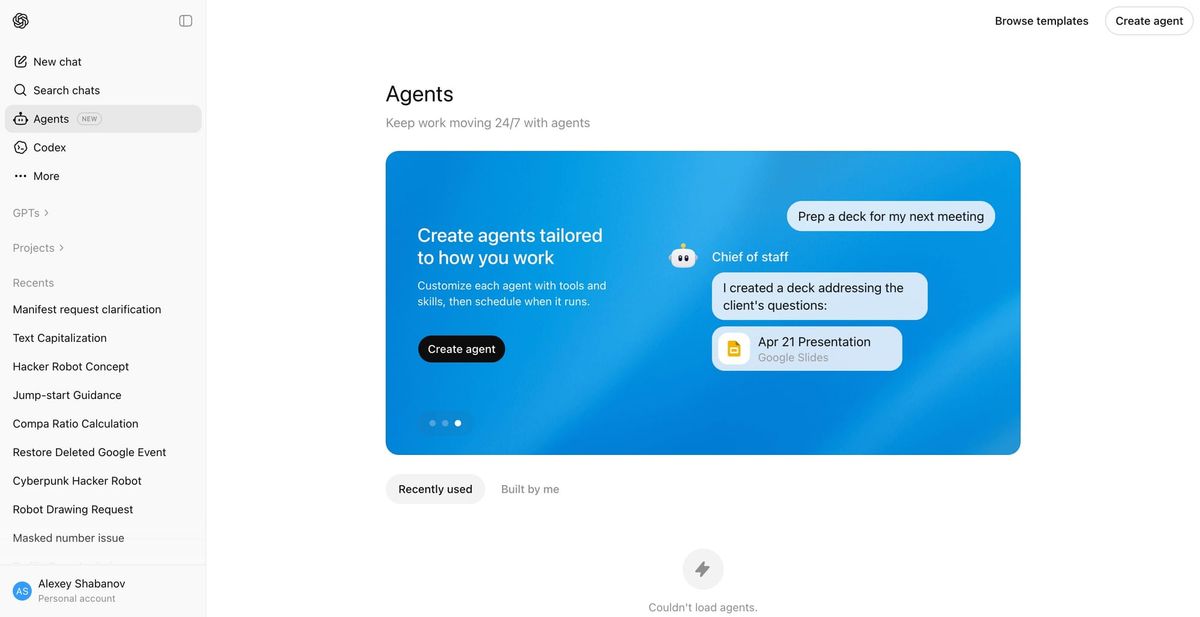
OpenAI is building Hermes, an always-on agent platform inside ChatGPT that lets users create persistent AI agents that run continuously and act independently rather than waiting for prompts.
Decoder
- Always-on agents: AI systems that run continuously in the background and act autonomously based on triggers, schedules, or incoming data, rather than requiring user prompts for each action
- Connectors: Integrations that allow agents to access external services, APIs, or data sources
- Skills: Specific capabilities or functions that can be attached to an agent to define what tasks it can perform
Original article
OpenAI appears to be preparing its most ambitious push into persistent, autonomous agents yet, with a new surface inside ChatGPT built around the internal codename Hermes. The section is labeled as a beta and sits at the top of the Agents area, positioning it as a first-class destination rather than an experimental side panel.
From there, users would be able to spin up their own agents directly within ChatGPT and run them continuously, with the product explicitly framing them as teammates that operate 24/7 rather than one-off task runners.
The building blocks point to a full agent platform rather than a single feature. Users will be able to assemble custom workflows, attach skills, plug in connectors, and wire agents into messaging surfaces so that conversations and triggers can reach them outside the ChatGPT window itself. Task scheduling is part of the same toolkit, which suggests these agents are meant to act on cadence, events, and incoming messages rather than waiting for a prompt.
Placeholder examples reference roles such as CTO or CPO, hinting that OpenAI expects people to define agents by function and eventually orchestrate several of them together, approaching something close to a small AI-run organization within a single account.
That ambition is where the context gets interesting. Notion has been the most visible player in this space so far, rolling out Custom Agents earlier this year as shared, trigger-based teammates with permissions, connectors, and scheduling. OpenAI entering the same territory from the ChatGPT side would apply significant pressure, because it brings the agent layer directly to hundreds of millions of consumer and business users who already have skills, connectors, and scheduled tasks inside the product.
The Hermes branding has surfaced consistently throughout the web app, reinforcing that this is active development rather than a passing experiment, although no release window has been confirmed. If it ships as structured, the next phase of ChatGPT would be less about a single assistant and more about a roster of always-on agents working in parallel on behalf of each user.