DEVOURED
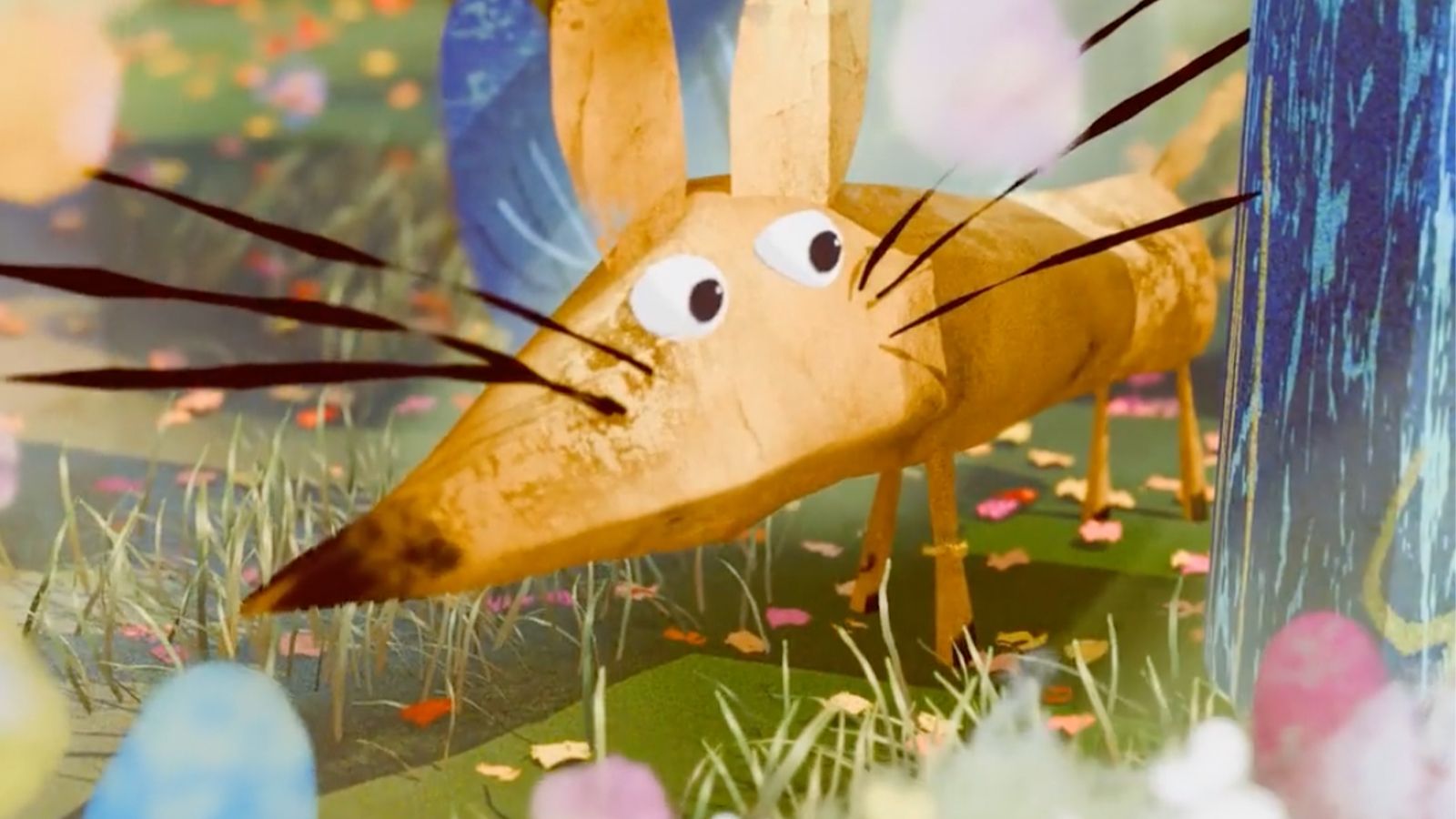
This Blender Deep Paint Artist Makes 3D Look Like a Children's Book Brought to Life
Artist Gaku Tada is shifting away from hyper-realistic 3D rendering in Blender by using Deep Paint to create evocative, children's book-style illustrations.
What: Gaku Tada utilizes Blender’s rendering pipeline paired with Deep Paint tools to produce 3D animations that prioritize watercolor-like, tactile textures over the industry-standard pursuit of photorealism.
Why it matters: As AI models become increasingly capable of generating polished, generic CGI, artists are finding that manual stylization and distinct artistic signatures are becoming the primary way to differentiate creative work.
Deep dive
- The industry focus is shifting from ray-traced realism toward non-photorealistic (NPR) rendering.
- Artists like Tada use tools like Grease Pencil and Deep Paint to introduce deliberate imperfections.
- The goal is to evoke emotional responses through style rather than technical simulation.
- Digital art platforms are seeing a trend where traditional illustration techniques are being mapped onto 3D environments.
- The distinction between "polished" 3D and "artistic" 3D is becoming a key value differentiator for creators.
Decoder
- Deep Paint: A 3D painting workflow that allows artists to apply textures directly to 3D meshes to simulate traditional media like watercolor or oil paint.
- NPR (Non-Photorealistic Rendering): A category of computer graphics that aims to make 3D imagery look like it was drawn or painted by hand, rather than aiming for real-world physical accuracy.
- Grease Pencil: A specialized object type in Blender that allows artists to draw in 3D space, bridging the gap between 2D illustration and 3D animation.
Original article
Gaku Tada's Blender scene, made with Deep Paint, resembles a children's book illustration rather than a typical 3D render, with painterly, watercolor-like textures.
Explore all 49 articles in today's digest
Fresh dev news, AI-digested daily. Never miss a trend at devoured.fyi