DEVOURED
Software engineering at a proprietary trading company: Optiver
Optiver's engineering culture prioritizes latency, reliability, and full-stack ownership to maintain an edge in high-frequency trading.
What: Optiver employs 950 engineers who manage a high-performance stack including custom Linux kernels, FPGAs, and co-located hardware to execute 10M+ trades daily. Their model emphasizes deep domain expertise and 'build-and-own' accountability rather than generic software speed.
Why it matters: This highlights the 'buy-side' engineering model where software performance directly correlates to P&L, necessitating rigorous testing and unconventional hardware-software integration.
Deep dive
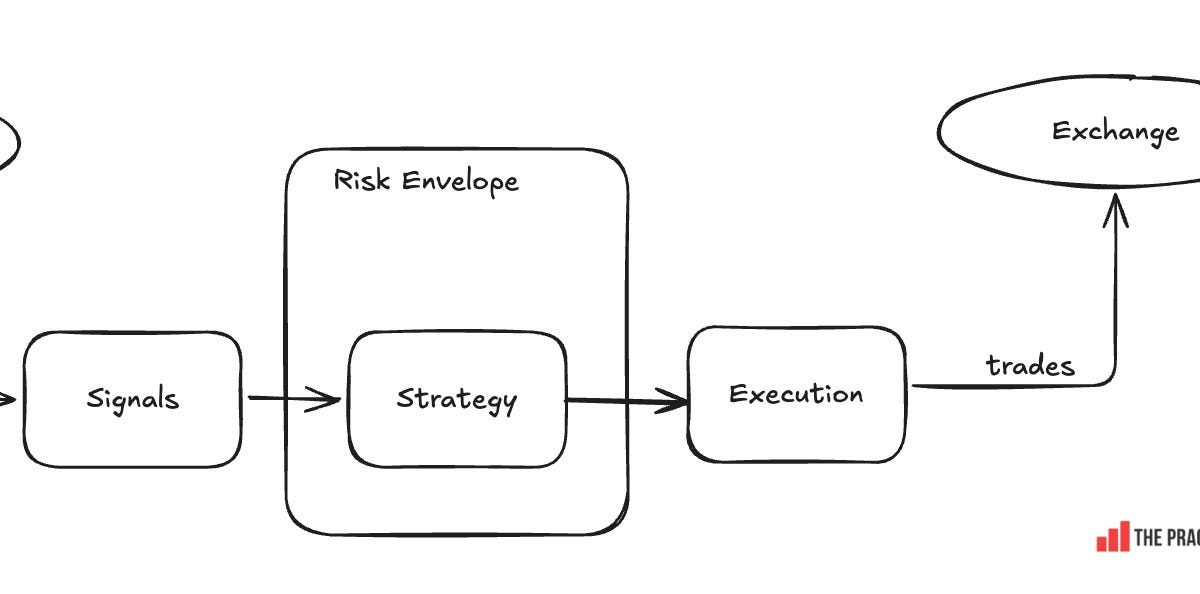
- Maintains a multi-layered platform: infrastructure, trading-specific services, and core trading loops.
- Uses C++ for latency-critical paths, Python for modeling, and increasing Rust usage for service orchestration.
- Standardizes global CI/CD on bare metal hardware to ensure predictable performance profiles.
- Employs a 'retreat' system that reprices options surfaces in nanoseconds.
- Structure consists of cross-functional vertical teams focused on desk goals and horizontal teams focused on cross-cutting platform concerns.
Decoder
- High-frequency trading (HFT): Trading financial assets using powerful computers to transact a large number of orders at extremely high speeds.
- Market maker: A financial entity that quotes both a buy and a sell price for a financial instrument in the market, hoping to make a profit on the bid-ask spread.
- FPGA: Field Programmable Gate Array, an integrated circuit designed to be configured by a customer or a designer after manufacturing.
Original article
Full article content is not available for inline reading.
Explore all 57 articles in today's digest
Fresh dev news, AI-digested daily. Never miss a trend at devoured.fyi