DEVOURED
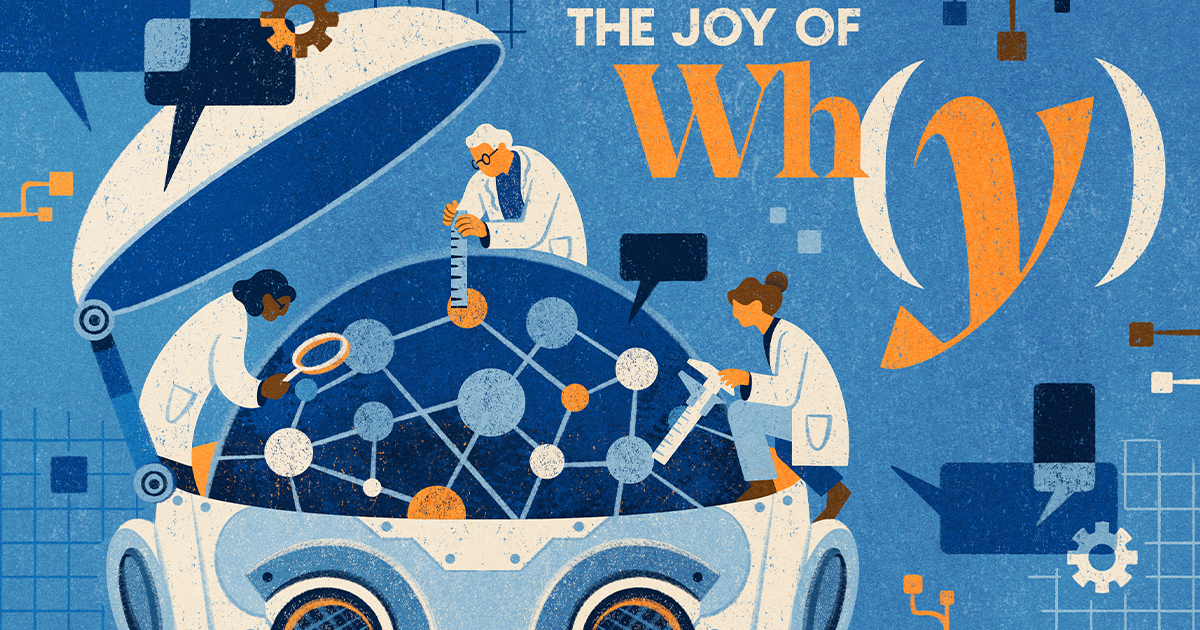
Are We Thinking Correctly About AI Intelligence?
Computer scientist Melanie Mitchell argues that current AI models function as 'alien intelligence' that requires rigorous, science-based experimental design, not just anthropomorphism.
What: Melanie Mitchell of the Santa Fe Institute proposes six principles for evaluating AI cognition, emphasizing that human-like fluency does not imply human-like reasoning. She highlights the 'Clever Hans' effect as a cautionary tale where models may appear intelligent by picking up on subtle cues rather than understanding underlying logic.
Why it matters: This shift from philosophical debate to experimental methodology suggests that our current benchmarks—often centered on specific tasks—are insufficient to measure true competence, masking potential failure modes in real-world application.
Deep dive
- AI exhibits 'alien intelligence' that operates through different mechanisms than human reasoning.
- We should treat AI evaluation like developmental psychology, using controlled experiments to isolate genuine capabilities.
- Anthropomorphism is a significant cognitive bias that skews perception of machine performance.
- Performance on specific tasks is frequently conflated with general competence.
- Mechanistic interpretability is essential to understanding the 'black box' of neural networks.
- Evaluation must account for failure types and negative results, which are currently underreported.
Decoder
- Anthropomorphism: The attribution of human traits, emotions, or intentions to non-human entities like AI systems.
- Mechanistic interpretability: The practice of reverse-engineering neural networks to understand the internal weights and activations, effectively attempting to 'open' the black box.
- Clever Hans Effect: A phenomenon where an entity appears to perform complex tasks by reading social cues from human observers rather than using the skill itself.
- In-distribution: Data or tasks that closely resemble the training data a model was exposed to, making them easier to handle.
- Out-of-distribution: Data or tasks that differ significantly from training data, exposing a model's lack of true generalization.
Original article
Full article content is not available for inline reading.
Explore all 58 articles in today's digest
Fresh dev news, AI-digested daily. Never miss a trend at devoured.fyi