DEVOURED
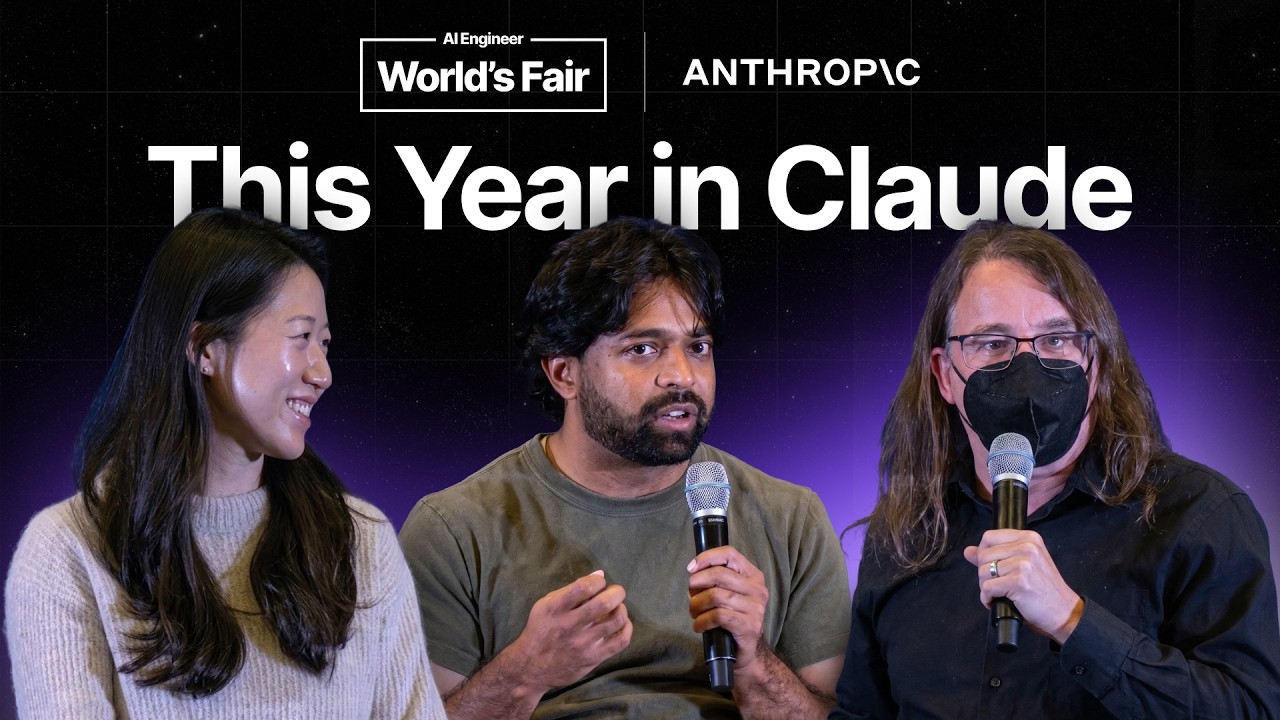
A Fireside Chat with Cat and Thariq from the Claude Code team
Anthropic's engineering team revealed that over 65% of their product code is now committed by Claude Tag, a collaborative, Slack-integrated agent.
What: Cat Wu and Thariq Shihipar shared that Claude Tag manages proactive bug fixes and PRs while utilizing team-specific memory. They also reported that moving away from 'don't do X' system prompt instructions has improved model performance.
Why it matters: This demonstrates a shift toward 'agent-native' development, where agents are treated as primary team members with persistent access to collaboration tools.
Deep dive
- Claude Tag is an agentic layer that monitors Slack channels for issues and proactively generates PRs.
- Anthropic uses 'ant fooding'—internal dogfooding—to validate agents before public release.
- Agents no longer require 'don't do' lists, which can actually degrade performance; context-rich, simpler prompts are preferred.
- Manual human review is increasingly replaced by automated agentic reviews for non-critical code paths.
- Auto-mode has become the standard for long-running, secure agentic tasks within the company.
- Developers are encouraged to be more ambitious as the cost of code generation drops, offloading execution to agents.
Decoder
- Dogfooding: The practice of a company using its own products in its internal development processes.
- Auto-mode: An agent configuration that allows it to execute chains of tools and make decisions without constant user approval prompts.
- Fable: Anthropic’s frontier coding model series.
- PR: Pull Request; a request to merge code changes into a central codebase.
Original article
Full article content is not available for inline reading.
Explore all 55 articles in today's digest
Fresh dev news, AI-digested daily. Never miss a trend at devoured.fyi