OpenAI makes its next hardware move with Opal Electronics
OpenAI is leading a funding round for Opal Electronics, known for high-end webcams, to develop new AI-native devices for creative work, aligning with Sam Altman's "ambient computing" vision.
Decoder
- Ambient computing: A vision for technology where computing is seamlessly integrated into the environment, becoming virtually invisible and always available without explicit user interaction, often through lightweight, screenless devices.
Original article
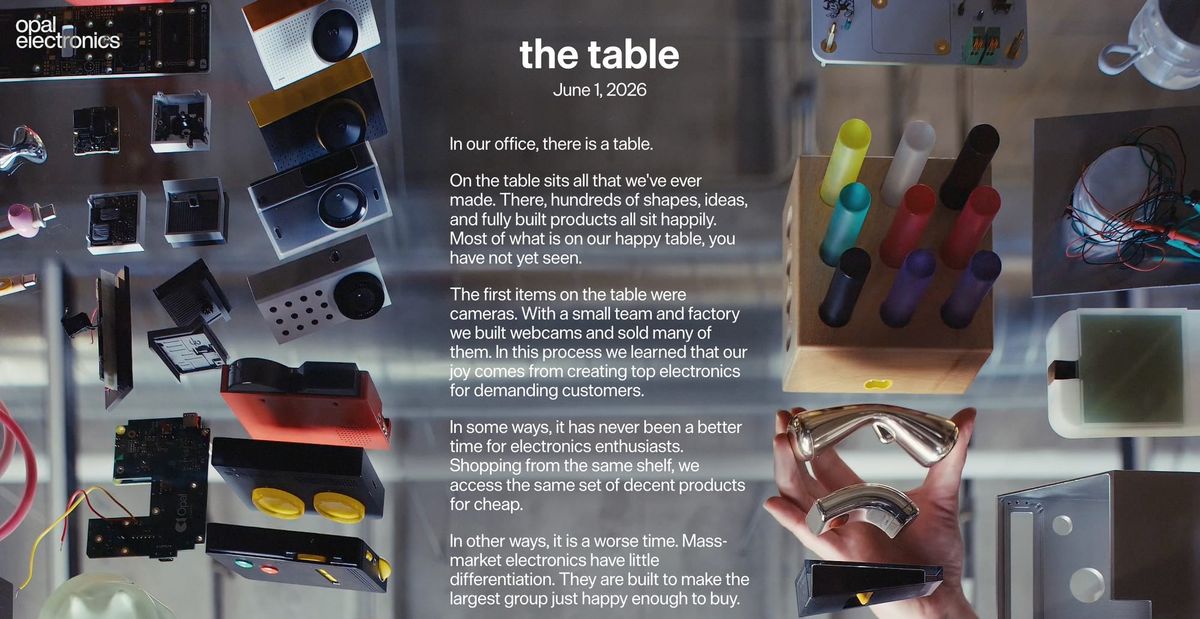
OpenAI is investing fresh capital into hardware by leading a new funding round for Opal Electronics, a San Francisco startup renowned for its high-end webcams. Known for creating the C1 and the pocket-sized Tadpole, Opal is reportedly preparing to launch a new product line in the coming months. This move will extend Opal's reach beyond cameras and into AI-native devices designed for creative work.
the table. an update on opal electronics. https://t.co/91eGxO5qV6
— Opal (@opalelectronics) June 2, 2026
The specifics of this new device remain unconfirmed. However, Opal’s background suggests it will be vision- and capture-oriented, potentially utilizing OpenAI’s image, video, and real-time voice models as its foundation. Integrating voice into a physical product would provide OpenAI with valuable insights into how users interact with an always-listening companion, offering data that a chat window cannot supply. Details such as form factor, pricing, and exact capabilities are still under wraps.
This investment aligns with a broader trend. Over the past year, OpenAI has been focusing on hardware development, inspired by Sam Altman’s vision for “ambient computing.” This concept involves lightweight gadgets that can sense the world in real time without relying on a screen. OpenAI's most notable project in this area, a palm-sized, screenless device developed with Jony Ive following the multibillion-dollar io acquisition, has faced delays. Originally slated for release, it has now been pushed to 2027 due to software, privacy, and computational challenges, and has lost its original name due to a trademark dispute. Despite these setbacks, Chris Lehane has maintained that devices remain a top priority for the company through 2026.
👀 Interesting... Google AI Studio product lead quoting https://t.co/AKoFUgA9O6 website, who just announced funding from @openai https://t.co/0gIK48vVJf pic.twitter.com/3gsbweqon4
— 🚨 AI News | TestingCatalog (@testingcatalog) June 3, 2026
In this context, the partnership with Opal appears to be more than a standalone venture; it is a strategic move to explore form factors, expedite product release, and gather user feedback while the flagship project continues to develop. For a company intent on moving beyond the smartphone, investing in the hardware that will eventually replace it is a logical progression, making this development one to watch as the first products begin to emerge.
Source
Fresh dev news, AI-digested daily. Never miss a trend at devoured.fyi