DEVOURED
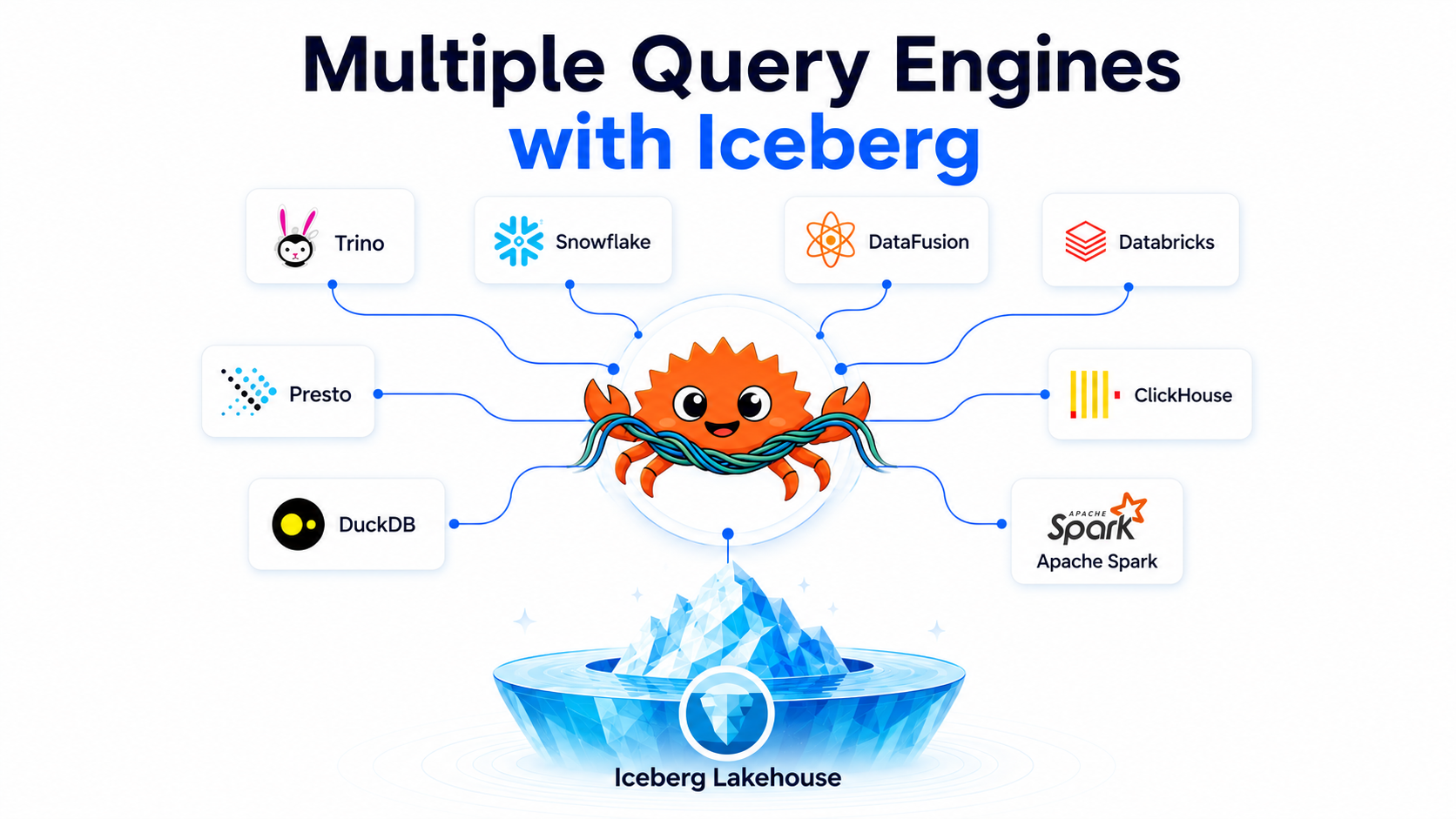
Routing Multiple Query Engines with Iceberg
QueryFlux is an open-source Rust SQL proxy enabling intelligent, cost-aware routing across multiple Iceberg query engines like Trino, Spark, and DuckDB.
What: QueryFlux, a Rust-based SQL routing proxy, intelligently directs queries across various engines (Trino, Spark, DuckDB, Snowflake, Athena, Flink) sharing Apache Iceberg tables. It handles protocol translation, SQL dialect conversion via SQLGlot, cost-aware routing, concurrency, and health-based failover with ~0.35ms p50 overhead.
Why it matters: This tool addresses the growing complexity and cost inefficiencies in modern lakehouses where multiple query engines are used, demonstrating a trend towards specialized, optimized infrastructure layers for data management.
Takeaway: If you manage an Iceberg lakehouse with multiple query engines, consider deploying QueryFlux to optimize query performance and costs by automatically routing queries to the most suitable engine.
Deep dive
- Problem: While Apache Iceberg enables multi-engine access to data, there's no inherent mechanism to choose the optimal engine for a given query, leading to suboptimal performance and cost.
- Solution: QueryFlux acts as a SQL routing proxy, sitting between clients and engines, making intelligent routing decisions.
- Architecture: It accepts queries via various protocols (Trino HTTP, PostgreSQL, MySQL wire), evaluates routing rules based on query type, client tags, or custom Python logic, then selects an engine.
- Key Capabilities: Low latency (~0.35ms p50 overhead), per-group concurrency limits, SQL dialect translation using SQLGlot for over 30 dialects, custom Python scripting for advanced routing and translation, and Prometheus/Grafana observability.
- LakeOps Extension: LakeOps (commercial offering) builds on QueryFlux by adding table-health-aware routing, query-pattern learning, optimization-driven engine expansion, and a unified cost model using Iceberg metadata and historical query data.
- Routing Strategies: Supports cost-based, latency-based, and throughput (balanced) routing, applicable per cluster group.
- Practical Patterns: Includes workload-scoped endpoints, cost-aware dispatch (up to 56% cost reduction in benchmarks), dashboard SLA protection, transparent engine migration using weighted strategies, and health-based failover.
- AI Agents: Discusses a future "agentic workloads" stack using adaptive, LLM, and semantic routers for unpredictable agent-generated queries, with guardrails for safety.
Decoder
- Apache Iceberg: An open table format for huge analytic datasets, providing ACID transactions, schema evolution, and hidden partitioning across multiple data processing engines.
- SQLGlot: An open-source Python SQL parser and translator that can convert SQL between different dialects.
- Lakehouse: A data architecture combining elements of data lakes (raw, unstructured data storage) and data warehouses (structured, optimized data for analytics) using technologies like Apache Iceberg.
- Trino: An open-source distributed SQL query engine for running analytics against various data sources.
- DuckDB: An in-process SQL OLAP database management system designed for analytical workloads on a single node.
- Puffin statistics: Metadata stored within Iceberg tables that can include min/max column stats, bloom filters, and other information to help query engines optimize scans.
Original article
Full article content is not available for inline reading.
Explore all 55 articles in today's digest
Fresh dev news, AI-digested daily. Never miss a trend at devoured.fyi