DEVOURED
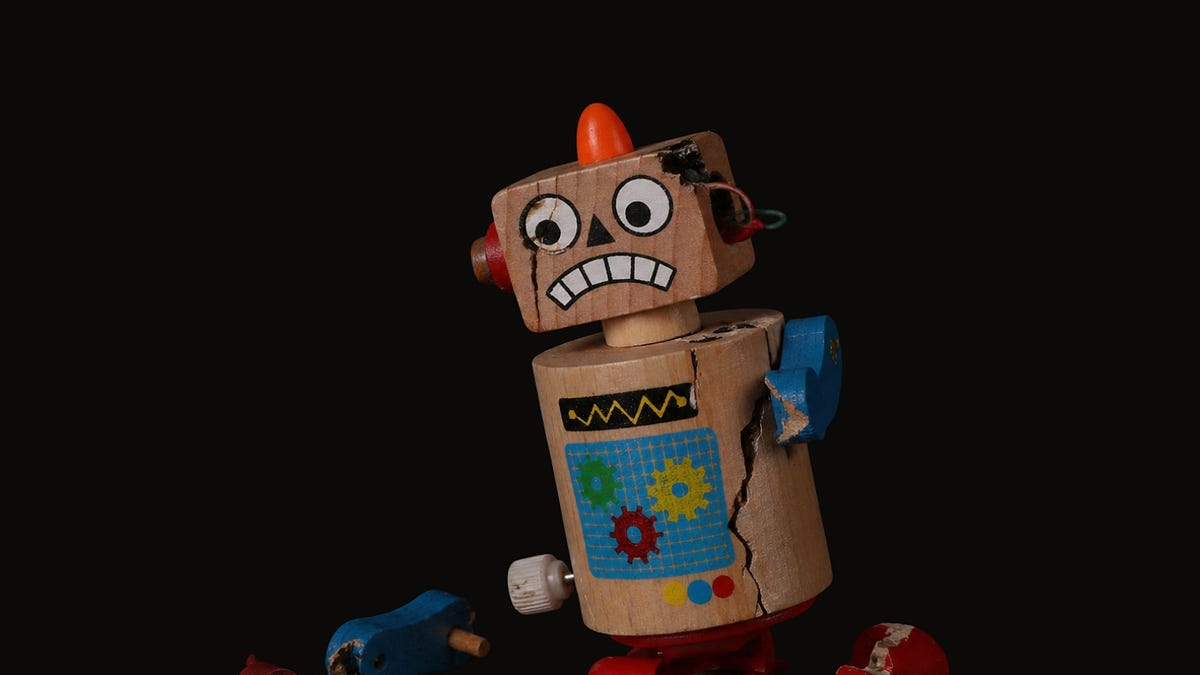
Frontier AI models collapse to under 1% on interactive physical reasoning tasks that humans solve near-perfectly, despite $4+ billion flowing into world models from Yann LeCun's AMI Labs, Fei-Fei Li's World Labs, and Skild AI.
What: Yann LeCun launched AMI Labs with a $1.03B seed round, Fei-Fei Li raised $1B for World Labs, and Skild AI secured $1.4B—all betting that world models trained on physical interaction data can overcome LLMs' inability to understand physics. ARC-AGI-3, a new benchmark using simple retro-style games, shows Gemini 3.1 Pro scored 0.37% on interactive tasks while median human performance hit near 100%. Author James Wang argues the core obstacle is 'data friction'—physical world data requires expensive sensors and infrastructure, unlike the free internet text that trained LLMs.
Why it matters: This exposes a fundamental breakdown in the scaling strategy that worked for LLMs. Rich Sutton's 'Bitter Lesson' says scale beats clever engineering, but only when data is abundant and cheap. Physical interaction data can't be generated through self-play or scraped from the web—it requires real robots in real environments gathering domain-specific experience that doesn't transfer across applications. The same long-tail variation that delayed autonomous vehicles by years is now fragmenting world model development across incompatible verticals.
Deep dive
- Yann LeCun's AMI Labs ($1.03B seed after 12 years at Meta), Fei-Fei Li's World Labs ($1B), and Skild AI ($1.4B) represent a wave of capital betting world models can solve what LLMs fundamentally cannot
- Alejandro Piad Morffis (University of Havana CS professor) critique: 'You cannot learn physics by reading about physics'—LLMs process statistical shadows of words without experiencing the physical world
- ARC-AGI-3 benchmark presents interactive game environments with no instructions, solvable by untrained humans near 100%, frontier models under 1% (Gemini 3.1 Pro 0.37%, Grok 0%)
- Same Gemini 3 family scored 84.6% on ARC-AGI-2's static puzzles, showing collapse when temporal/interactive reasoning required
- Three data sources all problematic: video (YouTube's 700k hours/day captures observation not interaction physics), simulation (brittle sim-to-real transfer), robotics teleoperation (slow, expensive, domain-specific)
- 'Data friction' creates the paradox: physical data's collection cost creates AI startup moats but blocks the diverse training sets world models need to generalize
- Historical echo: 1980s-1990s robotics (symbolic planners, Rodney Brooks's reactive behaviors, simulation policies) all hit the same variation wall—real-world exceptions break clean abstractions
- Rich Sutton's 'Bitter Lesson' vindicated by LLMs says scale beats engineering, but requires cheap abundant data—chess has unlimited self-play, internet handed trillions of tokens free, physical world offers neither
- Real-world casualties: Monarch Tractor ($240M raised) recently shut down, autonomous vehicle promises (BMW/Ford/Lyft all predicted 2021) years behind due to long-tail edge cases
- Sample efficiency gap: Wang's infant daughter recognized 'doggie' from single example, AlexNet (2012) required 1M+ labeled images for comparable classification
- LeCun's JEPA architecture aims to learn latent physical representations from visual data rather than hand-coding physics equations
- Wang's thesis: world models are operations problem not research problem—winners need data partnerships (warehouses, hospitals, construction sites) not cleverest architectures
- Vertical fragmentation that creates defensibility also prevents cross-domain generalization—warehouse manipulation data tells you nothing about surgery or kitchens
Decoder
- World models: AI systems trained on physical interaction data (video, simulation, robot telemetry) to learn how objects behave under gravity, force, and material physics, rather than statistical text patterns. The bet is that watching/experiencing physical interactions teaches implicit physics the way LLMs learned language from internet text.
- Data friction: The cost, time, and infrastructure complexity required to gather proprietary data. Digital data has zero friction (every user click auto-generates a data point for free). Physical data requires sensors, deliberate recording, and doesn't transfer across domains—warehouse robot data is useless for kitchen robots.
- Sim-to-real transfer: Challenge of getting robot behaviors trained in physics simulators to work in reality, where carpet vs tile, ambient lighting, and slight mass variations break assumptions baked into simulated physics.
- The Bitter Lesson: Rich Sutton's observation from 70 years of AI research that general methods leveraging computation at scale consistently beat systems encoding hand-crafted human knowledge—but only when learning signal is cheap and abundant.
- JEPA (Joint Embedding Predictive Architecture): Yann LeCun's architecture for learning latent physical representations from visual data rather than researchers hand-coding Newtonian mechanics and material properties.
- ARC-AGI: François Chollet's benchmark series testing abstract reasoning; version 3 uses interactive game-like environments requiring exploration, mental model building, and adaptation—tasks humans do effortlessly that expose frontier AI's 99%+ failure rate.
Original article
World models aim to advance AI from mere pattern recognition to understanding and interacting with the physical world, posing potential challenges like data friction and variation. Investments from AI pioneers like Yann LeCun are addressing these obstacles with significant billions to develop models that encapsulate complex physical interactions beyond current LLM capabilities. The struggle remains in obtaining diverse, high-quality, real-world data necessary for these models to function effectively, creating a significant challenge and opportunity in AI progression.
Explore all 73 articles in today's digest
Fresh dev news, AI-digested daily. Never miss a trend at devoured.fyi