DEVOURED
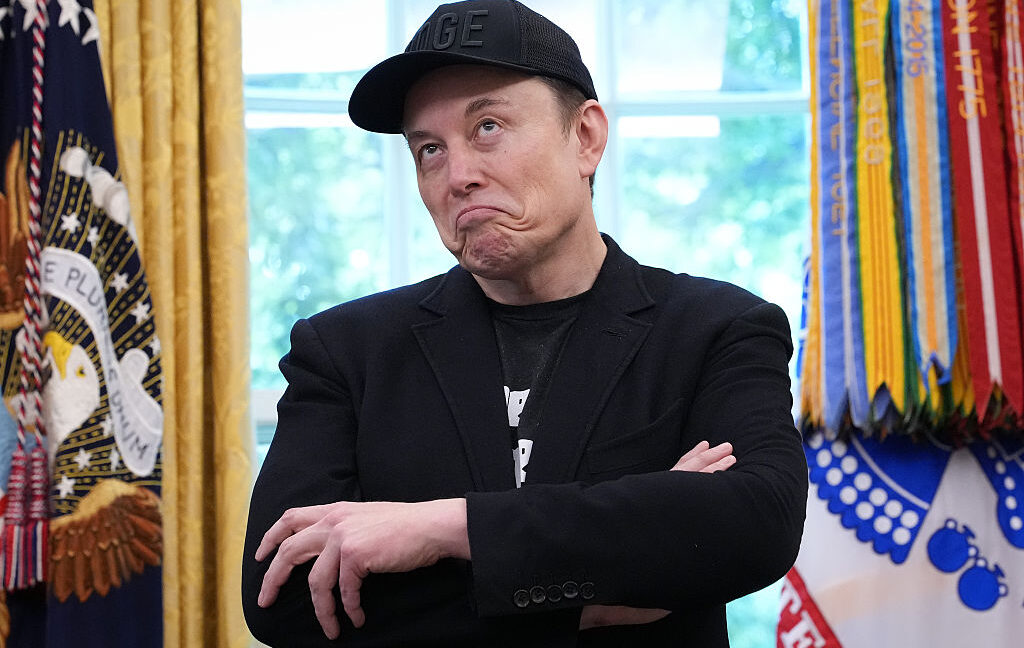
SpaceX's $75 billion IPO will require investors to permanently waive their right to sue and grant Elon Musk sole authority to appoint and remove the entire board.
What: SpaceX's IPO filing requires shareholders to waive all jury trial and class action rights via mandatory arbitration, taking advantage of a September 2025 SEC policy change. Elon Musk, who owns 42.5% equity but controls 83.8% of votes through supervoting shares, will have sole authority to elect, remove, or replace any board member. The company plans to raise $75 billion at a $2 trillion valuation. Texas incorporation provides additional shields against activist investors and eliminates requirements for independent director oversight on key committees.
Why it matters: SpaceX's governance model, enabled by Texas incorporation and the SEC's new arbitration stance, decouples capital from control more aggressively than any prior IPO. It's a direct response to Delaware courts voiding Musk's $55.8 billion Tesla pay package in 2024—prompting both firms to relocate to Texas—and could establish the template for how powerful founders go public without accepting traditional shareholder accountability.
Deep dive
- SpaceX is planning to go public in what would be the largest IPO in history, targeting $75 billion in capital raised at a $2 trillion valuation
- The IPO filing requires all shareholders to "irrevocably and unconditionally" waive their rights to jury trials, class action lawsuits, and legal challenges against the company, directors, officers, or bankers
- This mandatory arbitration clause exploits a September 2025 SEC policy statement declaring such provisions are not inconsistent with federal securities laws
- Elon Musk currently owns 42.5% of SpaceX equity but controls 83.8% of voting power through supervoting shares, and will maintain over 50% voting control post-IPO
- Musk has sole authority to elect, remove, or fill any vacancy on the board of directors and will serve as both CEO and board chairman
- SpaceX incorporated in Texas to benefit from state laws that require shareholders to own at least $1 million in stock to submit proposals and provide shields against activist investors and hostile takeovers
- As a "controlled company" under securities rules, SpaceX won't be required to have independent directors form majorities on nominating and compensation committees
- The structure follows a January 2024 Delaware court ruling that voided Musk's $55.8 billion Tesla pay package, finding board members were beholden to Musk or had conflicts
- Both Tesla and SpaceX subsequently relocated from Delaware to Texas, and Tesla later awarded Musk a new compensation plan potentially worth over $1 trillion
- Reuters characterized the approach as giving Musk "virtually unchecked executive authority" while eroding "typical shareholder protections in unprecedented ways"
- Bruce Herbert of Newground Social Investment said the plan "closes the voting door, the courthouse door and the proposal door simultaneously" creating "a total lack of accountability"
- The IPO filing is confidential, allowing SpaceX to move forward without revealing detailed financial information publicly
Decoder
- Supervoting shares: Stock that carries multiple votes per share (e.g., 10 votes per share vs. 1 for common stock), allowing founders to control decisions while owning a minority of equity
- Controlled company: A public company where a person or group controls more than 50% of voting power, exempting it from certain NYSE/Nasdaq requirements like independent director majorities
- Mandatory arbitration: Contractual requirement that disputes be resolved through private arbitration rather than courts, typically preventing class actions and limiting damages
- Proxy contest: Shareholder battle for control where investors vote on competing board director slates, often initiated by activist investors attempting to change management
- Tender offer: Public offer to purchase shares directly from shareholders at a premium, commonly used in hostile takeover attempts
Original article
Shareholders will be prohibited from bringing class actions against SpaceX, its directors, officers, controlling shareholders, or bankers tied to the IPO, and Musk will have the power to elect, remove, or fill any vacancy on the board of directors.
Explore all 73 articles in today's digest
Fresh dev news, AI-digested daily. Never miss a trend at devoured.fyi