DEVOURED
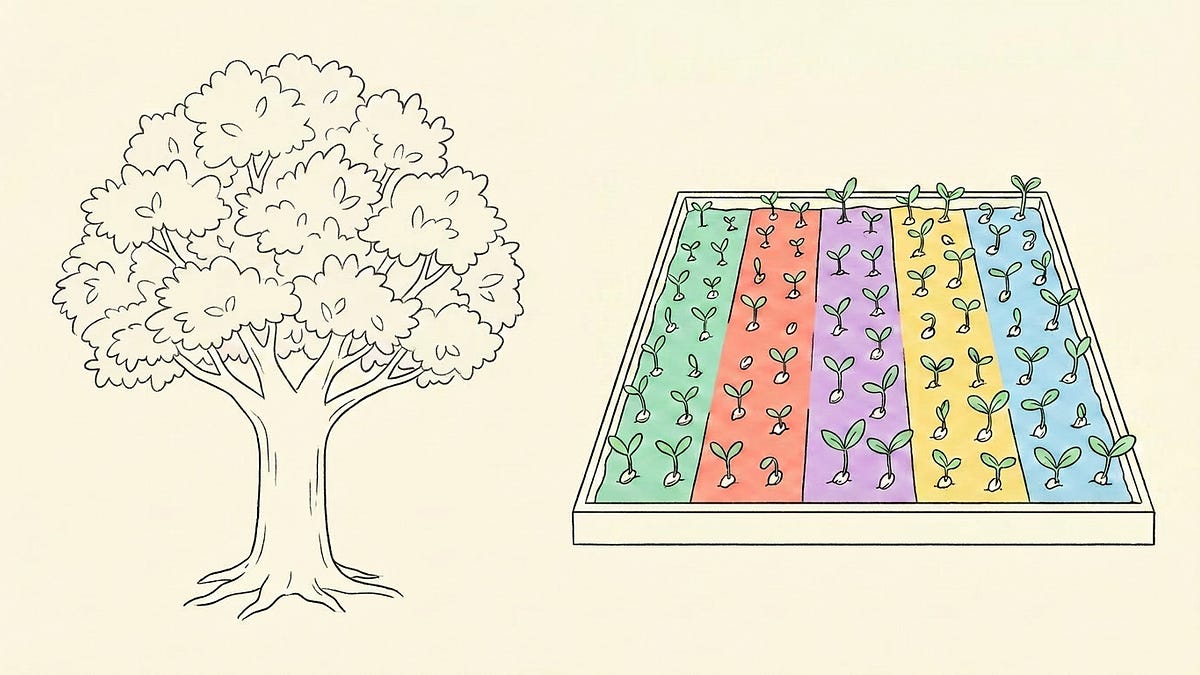
How Agents Use Systems Differently
Lovable exceeded GitHub's repo creation limits by orders of magnitude while Databricks sees 10-second median compute times as agents force infrastructure redesign.
What: Davis Treybig documents how AI agents break infrastructure assumptions—Lovable exceeds GitHub's repo creation rate limits by orders of magnitude, Databricks sees median compute time under 10 seconds, and Bauplan observes 10-100x query volume growth when agents use their database. Required redesign patterns: snapshotting, branch-native design (BranchBench paper shows current databases suffer 5-4000× slowdowns), rapid elastic scale, session-based queries, and exposing low-level APIs instead of black boxes.
Why it matters: This marks the reversal of 'dumb client, smart server' architecture—agents can handle complexity that would overwhelm humans, so infrastructure should expose thin APIs with full control instead of embedding intelligence in black-box servers. Senior engineers at leading AI labs have 'begged' web search providers to expose ranking systems and indices, but no one has built it yet because decades of human-centered design assumed complexity had to hide in the server.
Takeaway: If you maintain databases or cloud infrastructure that agents use, benchmark how your system performs with the patterns outlined here—snapshotting, branching, rapid scale-up/down, high concurrency—or read the BranchBench paper evaluating Neon, DoltgreSQL, Tigris, and Xata.
Deep dive
- Agents make many mistakes but backtrack well, so low-overhead snapshots become essential—Replit, Cloudflare, and Daytona now support full memory and disk snapshots for rapid rollback
- BranchBench paper evaluated branch-native databases and found a fundamental tension: systems optimized for fast branching (Neon, DoltgreSQL, Tigris, Xata) suffer 5-4000× slower reads as branches deepen, while systems optimized for fast reads have 25-1500× higher branch creation latency, highlighting the need for purpose-built agent databases
- Git worktrees, historically niche, have become enormously popular with coding agents because they provide complete branch functionality (branch, rebase, merge) with isolated environments
- Agent workloads are extremely spiky—Databricks Lakebase shows median compute time under 10 seconds because agents condense hour-long human analysis into <1 minute of queries then stop, requiring serverless stateless compute
- MongoDB research found 'agent spikes' (rapid, high-volume, retry-heavy query patterns) can cause system degradation or failure via negative feedback loops with load shedding and queue management designed for human patterns
- Claude Deep Research runs 10+ parallel web searches vs humans' sequential queries, increasing importance of semantic caching where query 2 reuses similar results from query 1
- Lovable 'literally cannot use GitHub because they exceed repo creation rate limits by multiple orders of magnitude,' driving new startups like Mesa and Relace optimized for high-volume small repos
- High volume/small data pattern changes storage design assumptions: 1000x more objects but each much smaller requires hash-based addressing, prefix sharding, minimal metadata overhead per object, different compaction strategies
- Portfolio company Bauplan sees 10-100x data workload growth when agents use their database vs humans; Turbopuffer's object-storage architecture offered 100x+ cost reduction vs Pinecone's in-memory design, enabling agent RAG use cases
- Coding agents commonly run 5-30 sequential grep queries vs humans' one-off searches; systems could optimize via session state, caching incremental results, and predictive querying
- Shift from 'dumb client, smart server' to 'smart client, dumb server'—senior AI lab engineers have 'begged' web search providers to expose ranking systems, metadata, query expansion, and indices to agents for better quality, but no one has built it; agents routinely exceed 32-word web search query limits
- Firetiger observability database optimizes for agent workloads (exhaustive high-cardinality data, immense parallel query volume, data discoverability) vs traditional human-focused design (dashboard latency via pre-aggregation and sampling)—requires flipping tradeoffs from latency to throughput, serialization to concurrency
Decoder
- CRDT (Conflict-free Replicated Data Type): Data structure enabling multiple agents to make concurrent edits that automatically merge without conflicts
- Lakebase: Databricks architecture merging analytical (OLAP) and transactional (OLTP) database capabilities, designed for agent workloads that blur traditional database boundaries
Original article
Full article content is not available for inline reading.
Explore all 67 articles in today's digest
Fresh dev news, AI-digested daily. Never miss a trend at devoured.fyi