DEVOURED
Rubin Tracks Skyscraper-Size Asteroids, Failed Supernovas, and Interstellar Visitors
Rubin Observatory found a 700-meter asteroid spinning every 1.88 minutes, impossible for a rubble pile—must be solid planetary core debris.
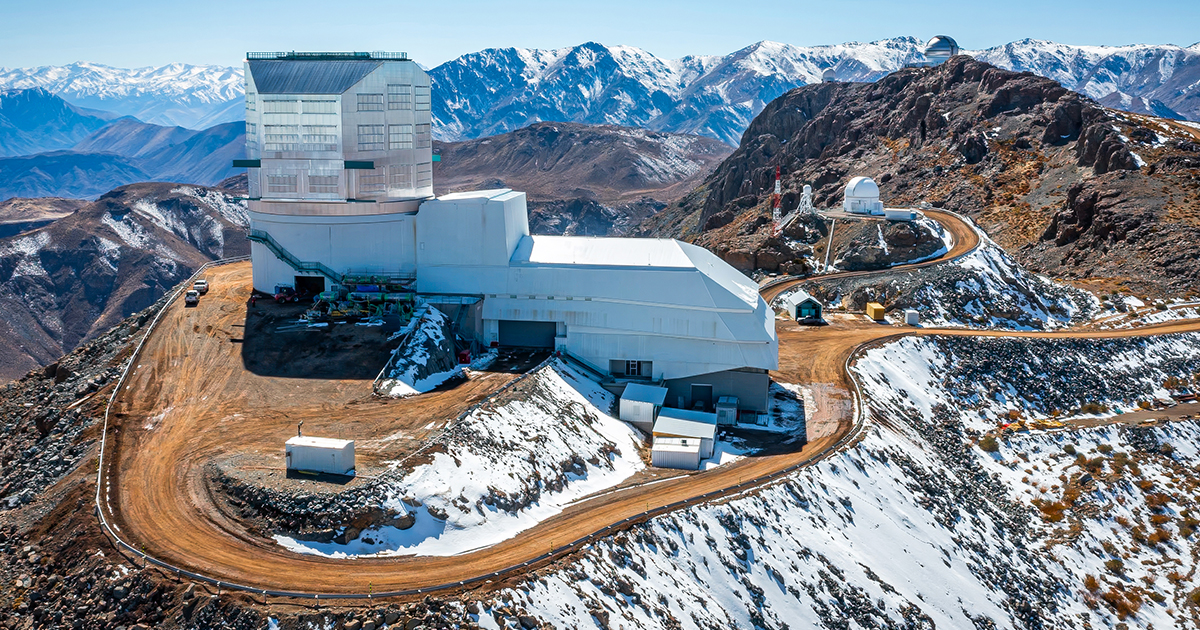
What: The Vera C. Rubin Observatory in Chile began operations with an 8.4-meter telescope and Earth's largest digital camera. Found 19 superfast asteroids including 2025 MN45 (700m diameter, 1.88-minute rotation). February 24, 2026 test: 800,000 alerts in one night. Full survey starting summer 2026: 7 million alerts, 20TB nightly, 1 million asteroids and 250,000 supernovas in year one.
Why it matters: This represents a 100-1000x increase in astronomy discovery rate, forcing the field to build data broker infrastructure (seven brokers including Lasair) and automated classification systems to handle the firehose—a microcosm of how observational science is shifting from human-limited cataloging to big-data pattern recognition.
Decoder
- Type Ia supernova: A specific category of stellar explosion used as a 'standard candle' to measure cosmic distances because they have consistent peak brightness; observations of fewer than 100 in the 1990s led to the discovery that the universe's expansion is accelerating.
- Photometric redshift: A technique to estimate an object's distance by analyzing how its light has shifted toward the red end of the electromagnetic spectrum due to the universe's expansion, without requiring detailed spectroscopy.
- Fast radio burst (FRB): Brief, intense flashes of radio waves from distant cosmic sources, possibly linked to highly magnetized neutron stars called magnetars; their physical origin remains unexplained.
- Hubble tension: The observed discrepancy between measurements of the universe's current expansion rate (using recent supernovas) and predictions based on the early universe (using cosmic microwave background radiation).
- Imminent impactor: Small asteroids (a few meters across) on collision course with Earth; Rubin simulations suggest it could detect these days in advance rather than hours, allowing scientists to position sensors and alert the public to watch the resulting fireball.
Original article
The Vera C. Rubin Observatory is designed to study the universe in greater detail than ever before. It is expected to discover a million asteroids, thousands of comets, and billions of stars and galaxies in its first year alone. The facility has begun collecting preliminary images and astronomers are poring over the initial data. Scientists have already been able to make new discoveries with its first images despite the images still not being as sharp as expected and the observatory still requiring a final tuning.
Explore all 67 articles in today's digest
Fresh dev news, AI-digested daily. Never miss a trend at devoured.fyi