DEVOURED
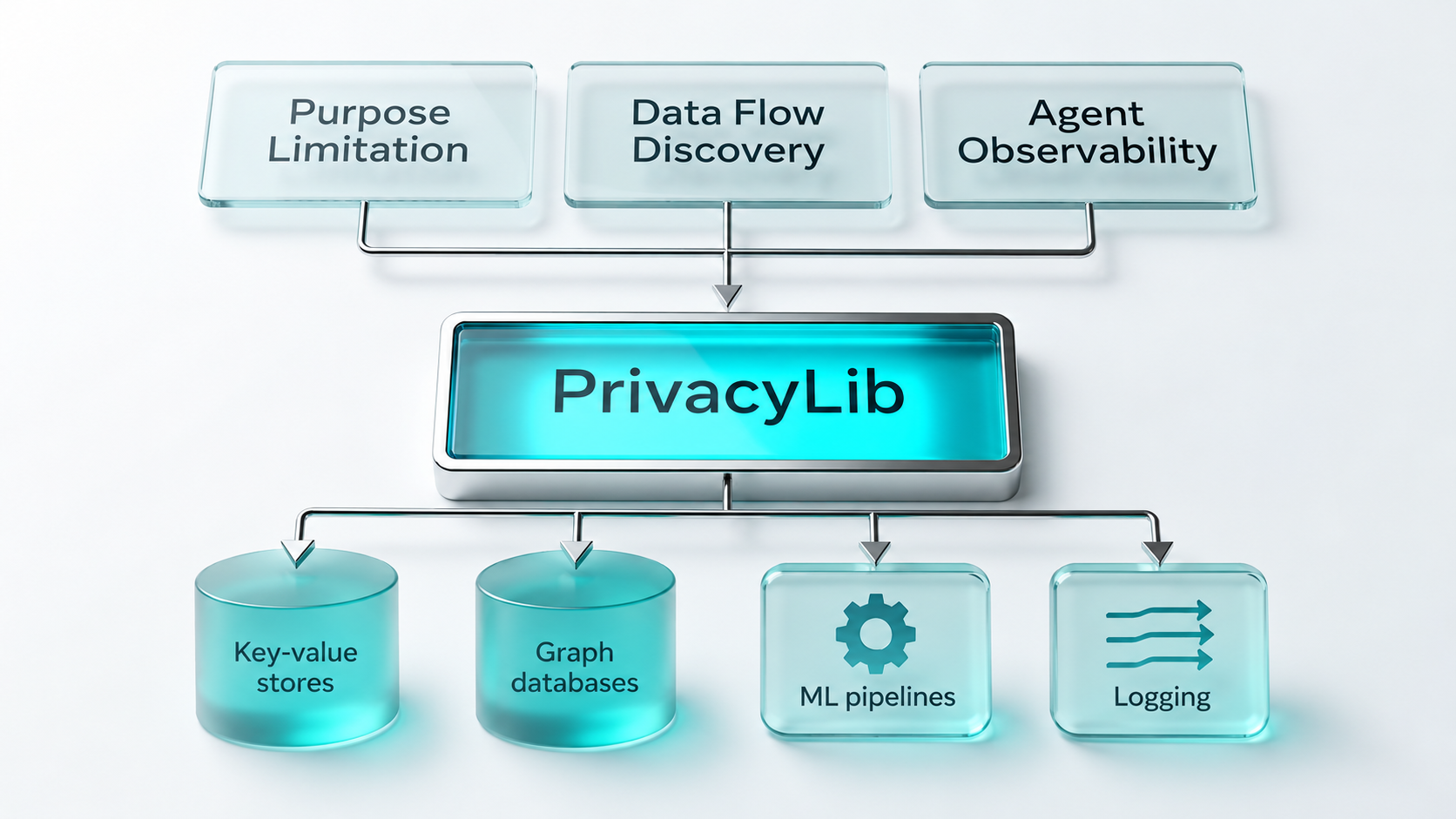
PrivacyLib: Privacy Controls at the Data Access Boundary
Meta built PrivacyLib to standardize and automate privacy enforcement across its data infrastructure at the point of access.
What: PrivacyLib is a shared library integrated into the client-side of Meta's data services. It uses 'modules' to enforce privacy rules, such as purpose limitation or flow discovery, replacing repetitive, system-specific implementations.
Why it matters: This move shifts privacy from a manual audit process to an infrastructure-level requirement that persists even as systems evolve and AI agents begin accessing data.
Deep dive
- Integration: Integrates at the data access boundary (e.g., client libraries) to capture rich request context.
- Execution: Supports five common operations (Read, Write, RPC, Request entry, Inline execution).
- Performance: Uses in-process evaluation and caching to handle billions of checks per second with minimal latency.
- Rollout safety: Changes are simulated against historical data flows before deployment and controlled via runtime flags.
- AI safety: AgentLib propagates context from tool calls to PrivacyLib to enforce privacy on dynamic AI-driven data access paths.
Decoder
- Data Access Boundary: The specific point in a software architecture where data is retrieved from storage or a service, serving as the most effective place for security enforcement.
- Policy Zones: Meta’s specific technology for information flow control that enforces purpose-based data usage rules.
Original article
Full article content is not available for inline reading.
Explore all 58 articles in today's digest
Fresh dev news, AI-digested daily. Never miss a trend at devoured.fyi