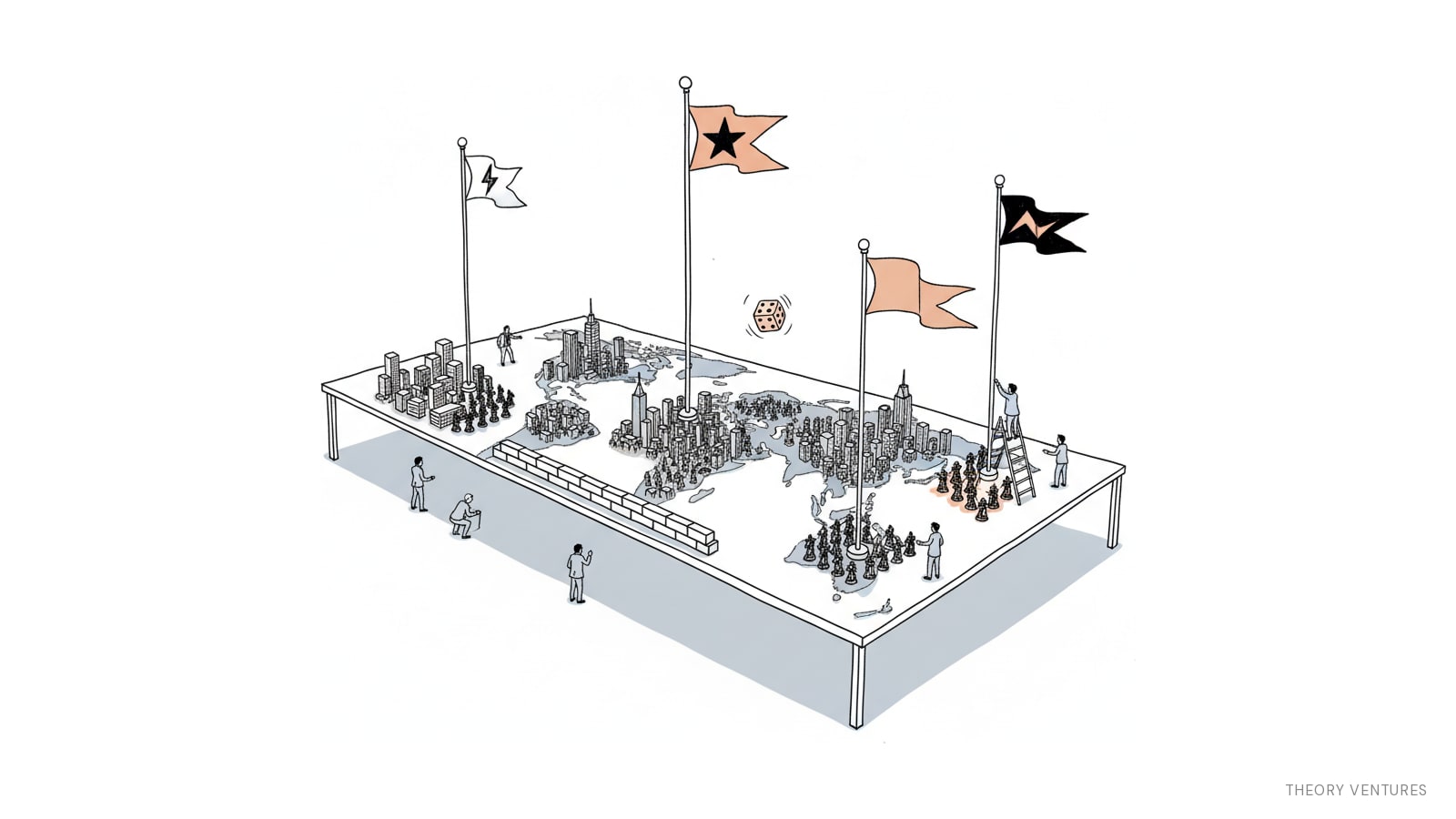
The Price of Entry to the Frontier
Frontier AI is shifting from a public utility to a gated industry as labs establish whitelists and governments impose strict access controls.
Decoder
- Zero Data Retention: A policy where cloud services guarantee that user data and inputs are not stored or used for model training.
Original article
In short : The frontier AI market is segmenting from both ends of its supply chain. Rationing programs & export limits decide who may run the strongest models. Downstream, enterprises standardize on one or two named vendors, & products ship with a default model inside.
The frontier AI market is sorting itself into closed camps, as labs pick partners, cut rivals, & ration access to their strongest models.
Salesforce chose Anthropic as its dedicated AI partner, making Claude the default model inside the world’s largest CRM & Slack. OpenAI cut Cursor’s API access on November 12 after SpaceX bought the company, citing prior contract breaches. Even the open weights models now impose gates : Z.ai released GLM-5.3-Flash under an MIT license on August 26 & put its flagship behind a $10b host-revenue review two days later.
Anthropic started the pattern this summer. Mythos 5, its strongest model, now ships only through Project Glasswing, a program that rations certain capabilities to trusted companies.
Fable, its sibling, went dark outside the United States for three weeks, then returned to US-only inference.
OpenAI made the mirrored choice, launching its government-facing GPT-5.6 variants to a small group of trusted partners before any public API. Governments are getting in on the act, deciding who may run the frontier at all.
Salesforce hardcoding Claude is de rigueur ; SaaS apps pick their components & pass them on a single app to the customer : take-it-or-leave-it.
The pluggable, model-agnostic ideal lived primarily in coding tools where developers expected to swap backends at will.
Enterprise buyers face an escalating governance challenge : strict Zero Data Retention policies, data sovereignty mandates, & an increasing wariness of sending their IP out the door in prompts. When platforms hardcode a single provider’s models, buyers must negotiate for leverage to be able to change it.
All of this to say, frontier AI is no longer a utility sold by the token. Labs are developing whitelists & blacklists.
Even the era of permissive open-source weights is narrowing. Model creators are introducing free-to-pay conversion thresholds, a form of product-led growth, allowing open experimentation for developers while requiring revenue-triggered security reviews & commercial licensing for large cloud hosts. Open source now means open until you scale.
Governments are treating frontier AI as critical sovereign infrastructure, using export restrictions, nationality screening, & specialized model tiers to police who runs the frontier.
Pushing back against this closure is a $5t countervailing force : Nvidia, leveraging its market cap to invest in open ecosystems. & they’ve been active : $13b for Hugging Face, $7b for Poolside’s model factory, & a $26b commitment to Nemotron. & the list continues.
Open weights are its structural defense against its own cloud customers, ensuring foundation models cannot be entirely gated by proprietary labs or sovereign restrictions.
Access, not price, is the new scarcity at the frontier.
Fresh dev news, AI-digested daily. Never miss a trend at devoured.fyi