DEVOURED
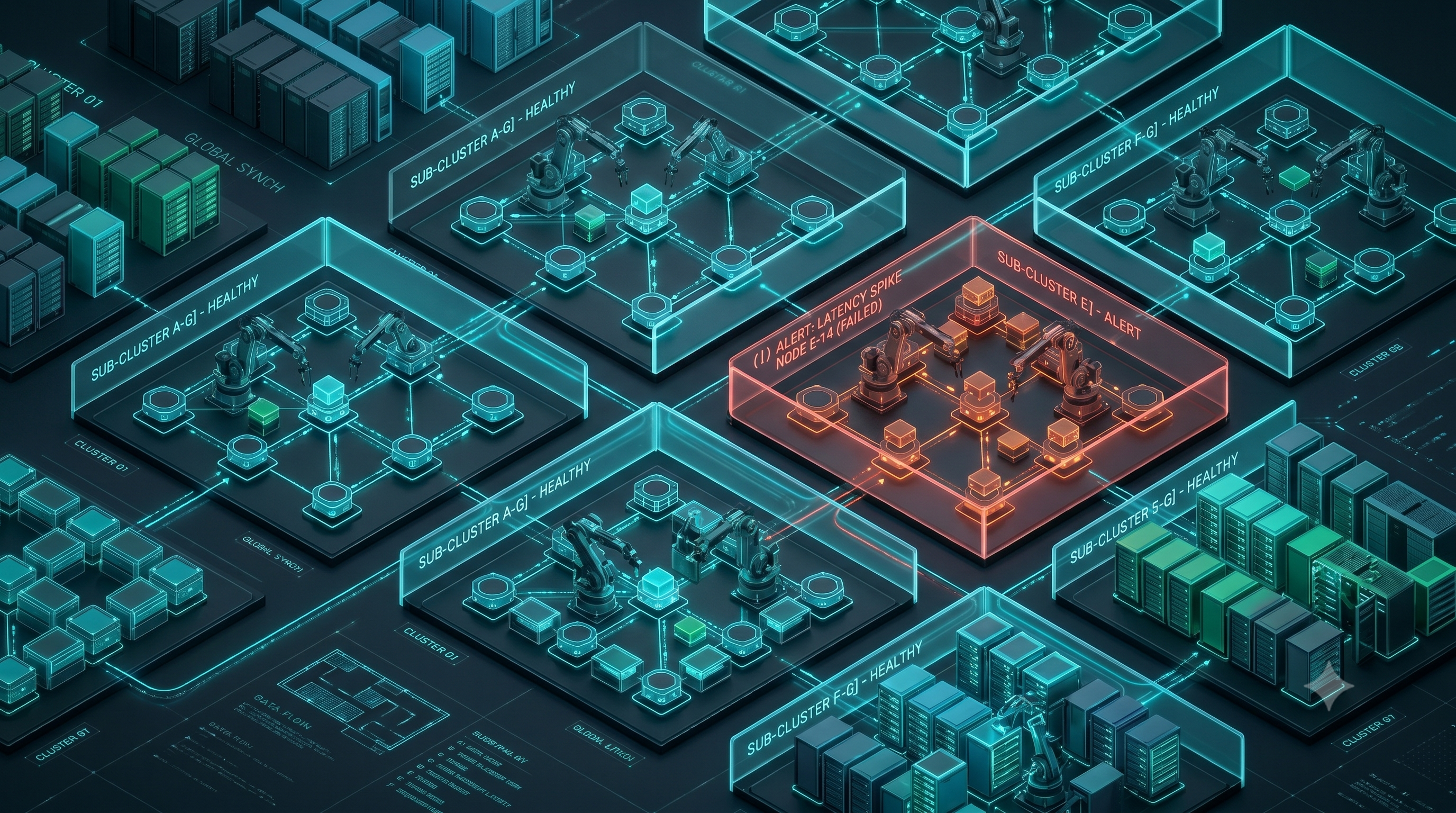
From Chaos to Control: Addressing Shard Distribution Challenges in M3DB with Subclusters
Uber redesigned M3DB's sharding architecture to use isolated subclusters, significantly reducing the blast radius of maintenance operations in large-scale databases.
What: Uber partitioned M3DB nodes into self-contained subclusters that own non-overlapping shard spaces. A greedy migration algorithm ensures that shard distribution remains balanced when scaling, preventing hot spots without requiring post-migration rebalancing passes.
Why it matters: As distributed databases grow, the 'all-to-all' communication pattern of standard sharding limits operational parallelism and increases failure domains; subclustering compartmentalizes the cluster to allow safe, parallel operations.
Deep dive
- Sharded placement in large clusters previously caused high operational noise and serialized maintenance due to wide failure domains.
- Subclusters partition nodes into fixed-size fault domains that share no shard overlap.
- The greedy migration algorithm evaluates shard donations to minimize intra-subcluster skew during scaling events.
- Cross-subcluster shard sharing is restricted to temporary, safe states during transitions.
- The subcluster model allows operational tasks like bootstrapping and maintenance to run in parallel across different subcluster groups.
Decoder
- Shard: A horizontal partition of data in a database, allowing it to be distributed across multiple nodes.
- Blast Radius: The potential scope of a system failure, or the impact of a maintenance operation on the wider infrastructure.
Original article
Full article content is not available for inline reading.
Explore all 55 articles in today's digest
Fresh dev news, AI-digested daily. Never miss a trend at devoured.fyi