DEVOURED
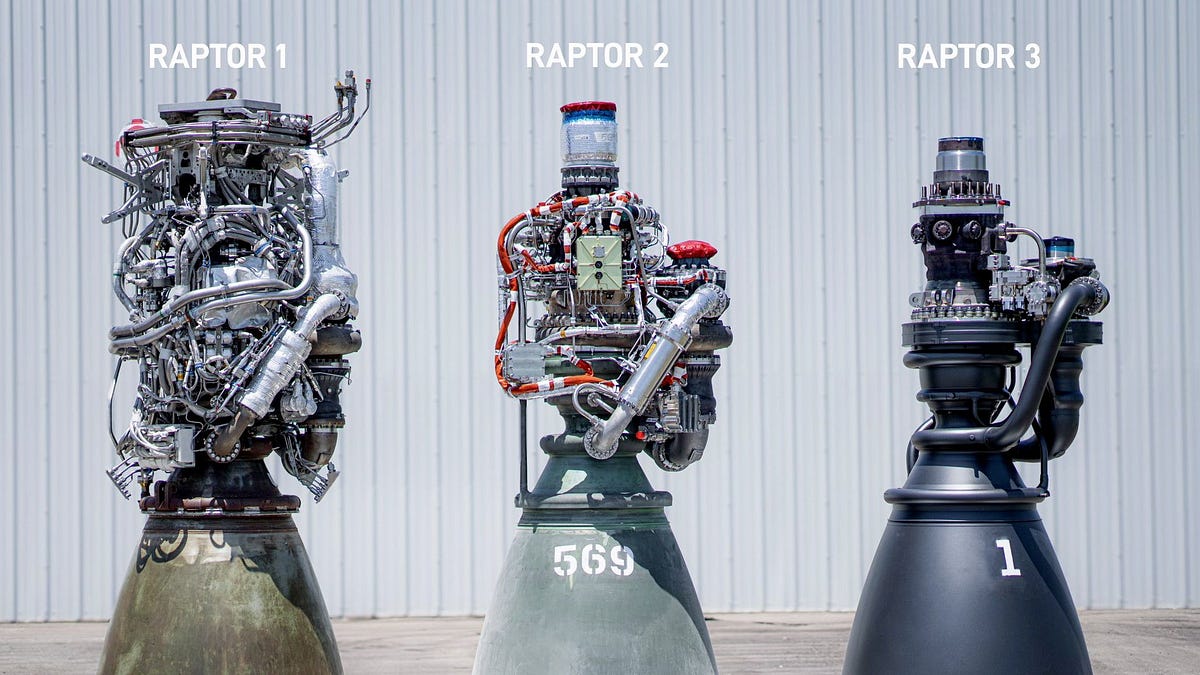
How SpaceX Streamlined the Raptor Engine
SpaceX’s Raptor engine evolved from a 'tangle of pipes' to a streamlined power plant by internalizing components via 3D printing and sensor reduction.
What: Raptor 3 delivers 35% more thrust than version 1, achieving a streamlined form factor by removing external heat shields, internalizing propellant lines, and replacing bolted connections with welds.
Why it matters: This demonstrates how SpaceX uses massive amounts of iteration to simplify manufacturing and increase power density, treating hardware design similarly to software refactoring.
Deep dive
- Design evolution: The architecture remains 'full-flow staged combustion' (FFSC), but supports thousands of tiny refinements.
- Internalization: Much of the external complexity (pipes, sensors, cables) was moved inside or eliminated to reduce mass.
- 3D Printing: Leveraging Velo3D technology allowed for more compact and integrated components that were previously impossible to cast or machine.
- Sensors: Raptor 1 was essentially a development test-bench with high sensor density; as the design matured, many were removed or integrated.
- Manufacturing: The shift from bolting flanges to welding connections saves weight but impacts serviceability, reflecting a philosophy favoring production speed over easy maintenance.
Decoder
- Full-flow staged combustion (FFSC): A complex rocket engine cycle where all propellants are routed through preburners to drive pumps before entering the main combustion chamber.
- Autogenous pressurization: A technique where rocket propellant is used to pressurize its own storage tanks, reducing the need for separate gas systems.
- Regenerative cooling: Routing cold fuel through channels in the nozzle walls to keep them from melting before the fuel enters the combustion chamber.
Original article
Full article content is not available for inline reading.
Explore all 58 articles in today's digest
Fresh dev news, AI-digested daily. Never miss a trend at devoured.fyi