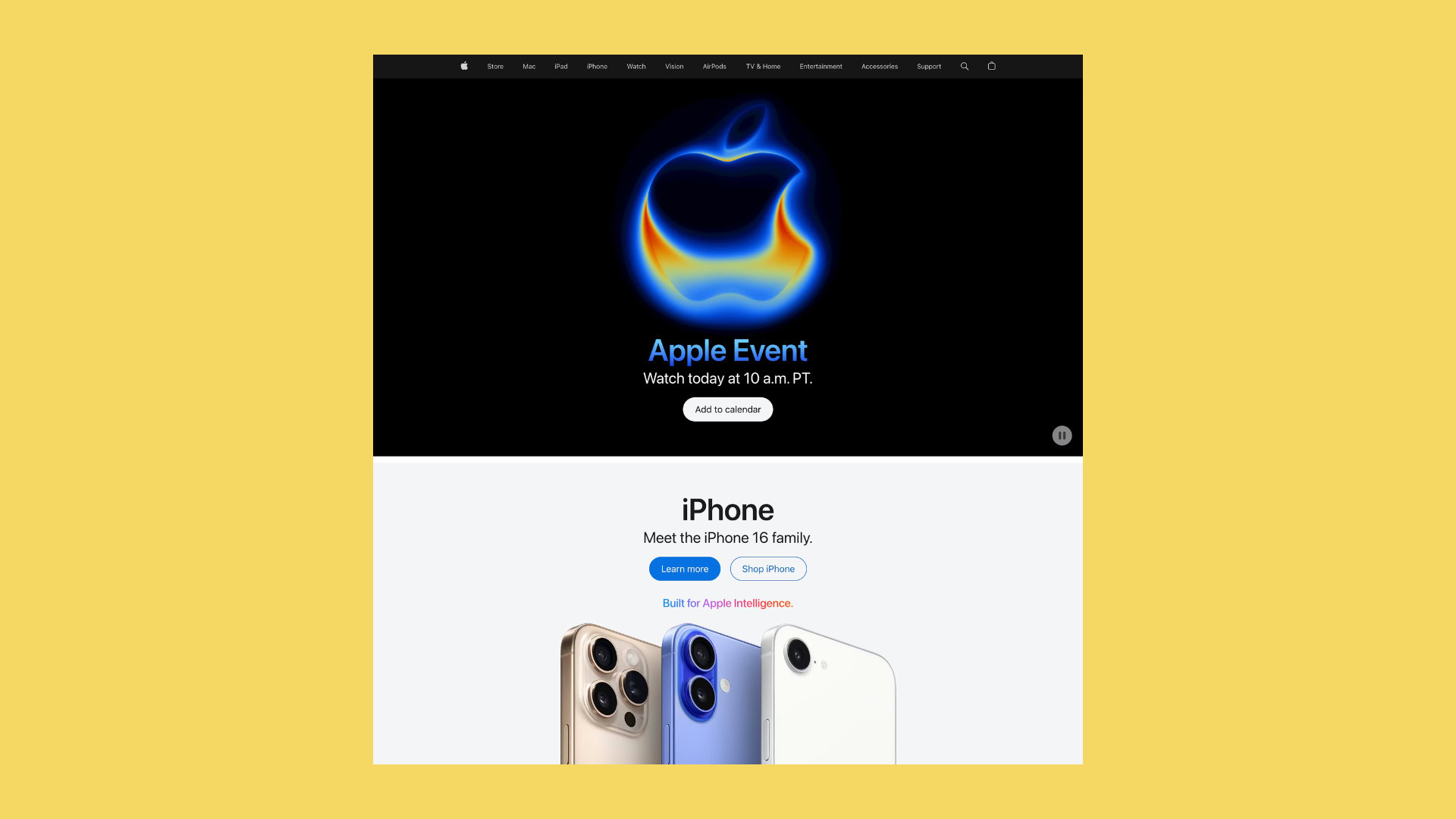
Apple UX Principle: How Simplicity Drives Apple's 5–10% Conversion Rates (8 minute read)
Apple achieves 5-10% conversion rates (versus the typical 2-3% e-commerce average) by treating product pages as behavioral systems that eliminate friction through five integrated UX principles.
Deep dive
- Most websites fail to convert because they present multiple product options, dense feature lists, and competing messages simultaneously, creating choice overload rather than decision clarity
- Apple product pages function as guided decision systems with narrative structure: broad aspirational introduction, specific features and use cases in the middle, practical configuration and pricing at the end
- Usability principle focuses on "effortless" rather than "easy" interfaces by aligning with existing mental models, eliminating small cumulative moments of confusion that cause users to pause and think
- Communication is sequential rather than parallel: each section focuses on a single idea, building from "What is this?" to "Why does this matter?" to "How does this fit into my life?"
- Functionality is measured by flow rather than capability, maintaining momentum by eliminating unnecessary steps and ensuring each interaction leads naturally to the next
- Aesthetics reduce cognitive load by making important information stand out and leverage the aesthetic-usability effect where visually appealing designs are perceived as more trustworthy
- Emotional design addresses final hesitation through smooth interactions, natural animations, and immediate feedback that create a sense of control and confidence
- The five principles work as an integrated system where each addresses a specific conversion barrier: usability removes friction, communication builds understanding, functionality maintains momentum, aesthetics builds trust, emotional design builds confidence
- Small improvements in each area compound multiplicatively: reduced friction increases engagement, which improves understanding, which increases confidence, which drives conversions
- The 5-10% conversion rate results from controlling the entire experience to avoid drop-off at multiple stages rather than a single breakthrough tactic
- Behavioral research by Sheena Iyengar and Mark Lepper shows that excessive choice consistently reduces decision-making across contexts
- Application requires shifting from "what to add" to "what to remove" and designing interfaces that communicate visually rather than through explanation
- The approach is accessible without Apple-level resources by focusing on progressive information disclosure and aligning every element around a single page goal
Decoder
- Cognitive load: The mental effort required to process information; excessive load causes decision paralysis and abandonment
- Choice overload: The phenomenon where presenting too many options paradoxically reduces the likelihood of making any decision
- Friction: Small moments of confusion or uncertainty that interrupt user flow and increase abandonment rates
- Aesthetic-usability effect: The psychological tendency to perceive visually appealing designs as more usable and trustworthy
- Conversion rate: The percentage of visitors who complete a desired action (typically purchase); e-commerce average is 2-3%, Apple achieves 5-10%
Original article
Apple's UX strategy isn't just aesthetic minimalism — it's a behavioral system built around five interlocking principles (usability, communication, functionality, aesthetics, and emotional design) that together eliminate friction and guide users toward confident decisions. Product pages function as structured narratives, distributing cognitive effort progressively so that, by the time users reach a call to action, purchasing feels like a natural conclusion rather than a deliberate choice. This approach is credited with driving conversion rates of 5–10%, well above the typical e-commerce average of 2–3%.