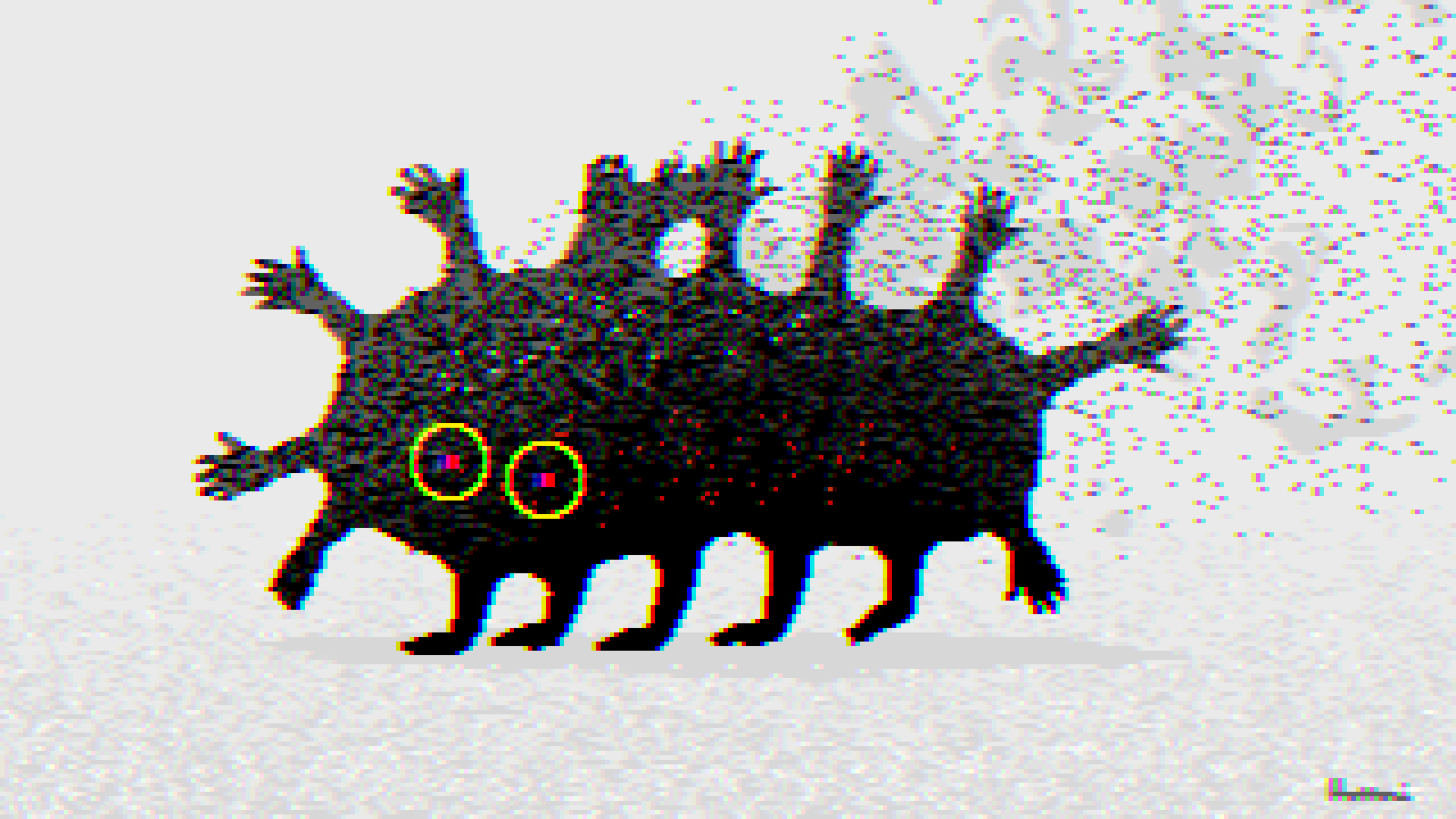
Forget Nostalgia, Modern Pixel Art is More than Retro Gaming (9 minute read)
Tokyo-based pixel artist Shingo Kabaya argues that modern pixel art has evolved beyond retro gaming nostalgia into a legitimate artistic medium with its own aesthetic principles.
What: An interview with Shingo Kabaya (Hattori Graphics), who has worked on games like Romeo is a Dead Man and Urban Myth Dissolution Center, exploring how pixel art is increasingly commissioned for its clarity and universality rather than just nostalgic associations with 8-bit gaming.
Why it matters: This challenges the common perception that pixel art is merely a retro aesthetic, showing how creative constraints in digital art can be deliberately chosen rather than technically imposed, and how a medium once limited by hardware can become a sophisticated artistic choice.
Takeaway: If you want to learn pixel art, Kabaya recommends starting with maximum 16 pixels square and about three colors to understand the fundamentals without getting lost in complexity.
Deep dive
- Kabaya started in games industry during the PS2 era as a 3D artist when pixel art was no longer mainstream, but found pixel art suited his personality better than 3D modeling
- Clients increasingly request pixel art without demanding "game-like" visual styles, thanks to talented young artists on social media spreading diverse modern approaches
- Pixel art's universality comes from its clarity—unlike a photograph with hidden technical information, pixel art shows its entire structure at a glance with nothing hidden
- The artist prefers "coarser sprites" at bare minimum resolution that still conveys the intended image, which has practical advantages like faster completion time
- His creative process typically involves challenging himself to capture complex subjects or expressions using the simplest possible pixel composition
- Most of his work starts directly in pixels rather than concepting through other media like sketches, since the ability to render at particular resolutions is critical
- Uses Adobe Photoshop despite trying specialized pixel art tools, noting Photoshop retains ancient features from when all computer graphics was pixel art
- Modern web compression formats like JPEG and H.264 "completely destroy the beautiful pixel edges," forcing pixel artists to manually upscale work before web submission
- GIF format, once ideal for pixel art, is being automatically replaced with MP4 on many platforms with dwindling support
- Some home TVs have default "edge enhancement" features that are highly destructive to pixel art, creating friction with high-resolution society
- Believes today's pixel art constraints are not technical limitations but creative choices artists make for their own purposes, driven by joy in creation
Decoder
- 8-bit/16-bit era: Gaming periods in the 1980s-90s when hardware limitations forced artists to work with small color palettes and low resolutions
- Sprite: A 2D bitmap image or animation integrated into a larger scene, commonly used in games for characters and objects
- HD-2D: A visual style that combines pixel art sprites with modern 3D environments and lighting effects, popularized by Square Enix games
- Resolution: In pixel art context, refers to the grid dimensions (e.g., 16x16 pixels) that define how detailed or "chunky" the artwork appears
Original article
Modern pixel art has evolved beyond nostalgia and retro-gaming associations of the 8-bit era.