Google debuts Workspace Intelligence for Gemini Workspace (4 minute read)
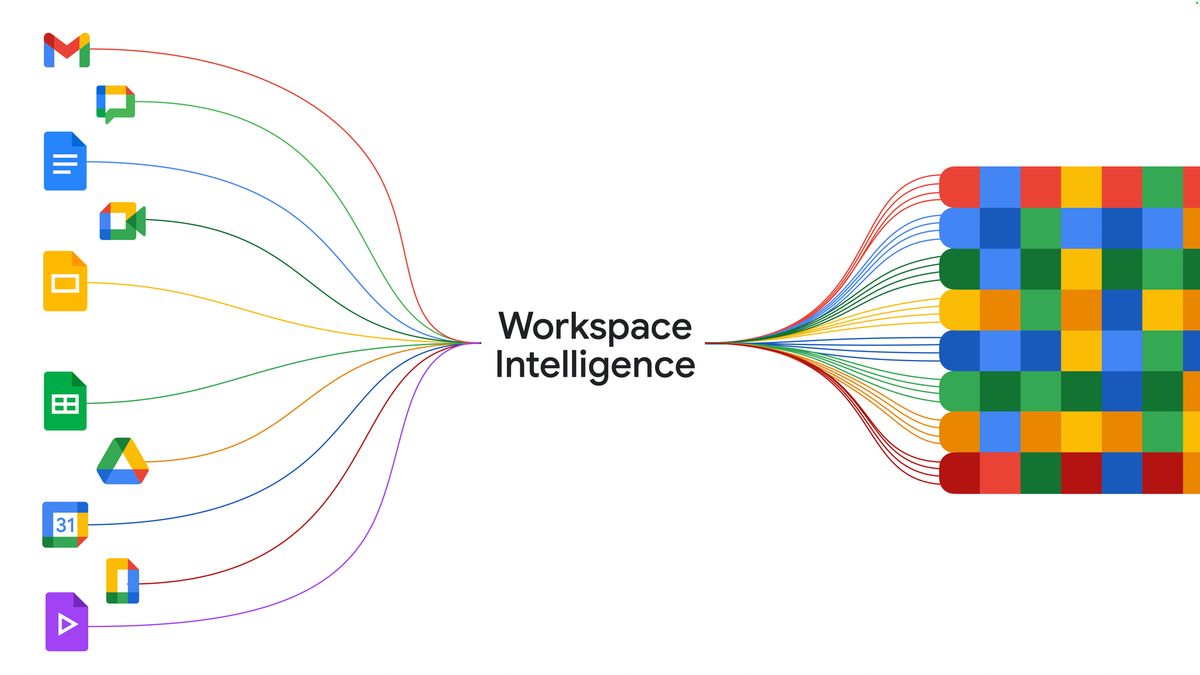
Google launched Workspace Intelligence to give Gemini AI agents cross-application context across all Google Workspace tools, turning the productivity suite into an integrated AI control layer.
Deep dive
- Workspace Intelligence creates a semantic layer that understands relationships between emails, chats, files, collaborators, and active projects across Google Workspace
- Google Chat with Gemini becomes a command-line interface for work, handling daily briefings, file retrieval by description, document generation, and meeting scheduling
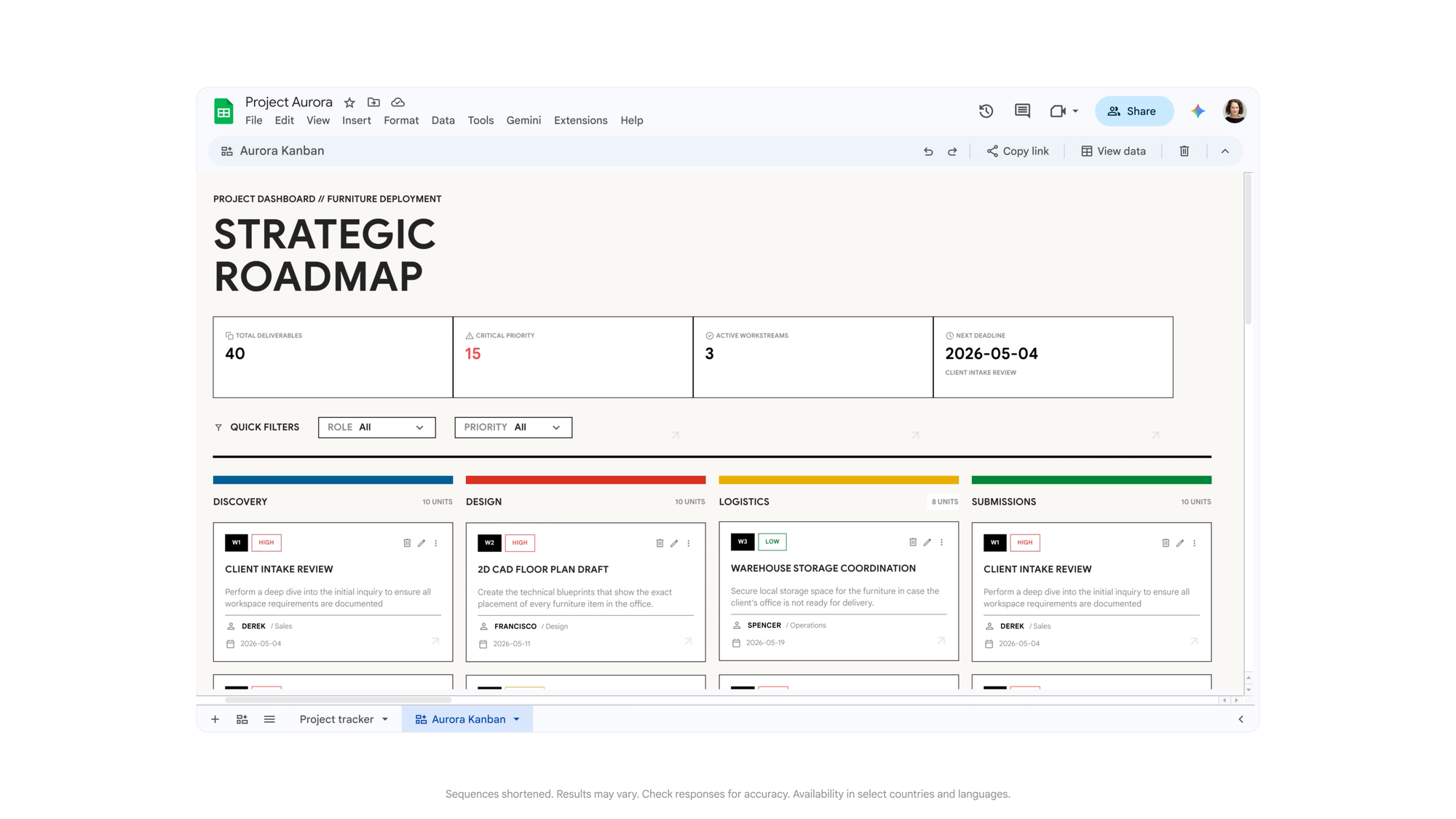
- Sheets gains natural-language spreadsheet creation, third-party imports from HubSpot and Salesforce, and a canvas layer for dashboards and kanban views
- Docs can now generate data-grounded infographics, batch-edit images for consistency, and automate comment triage
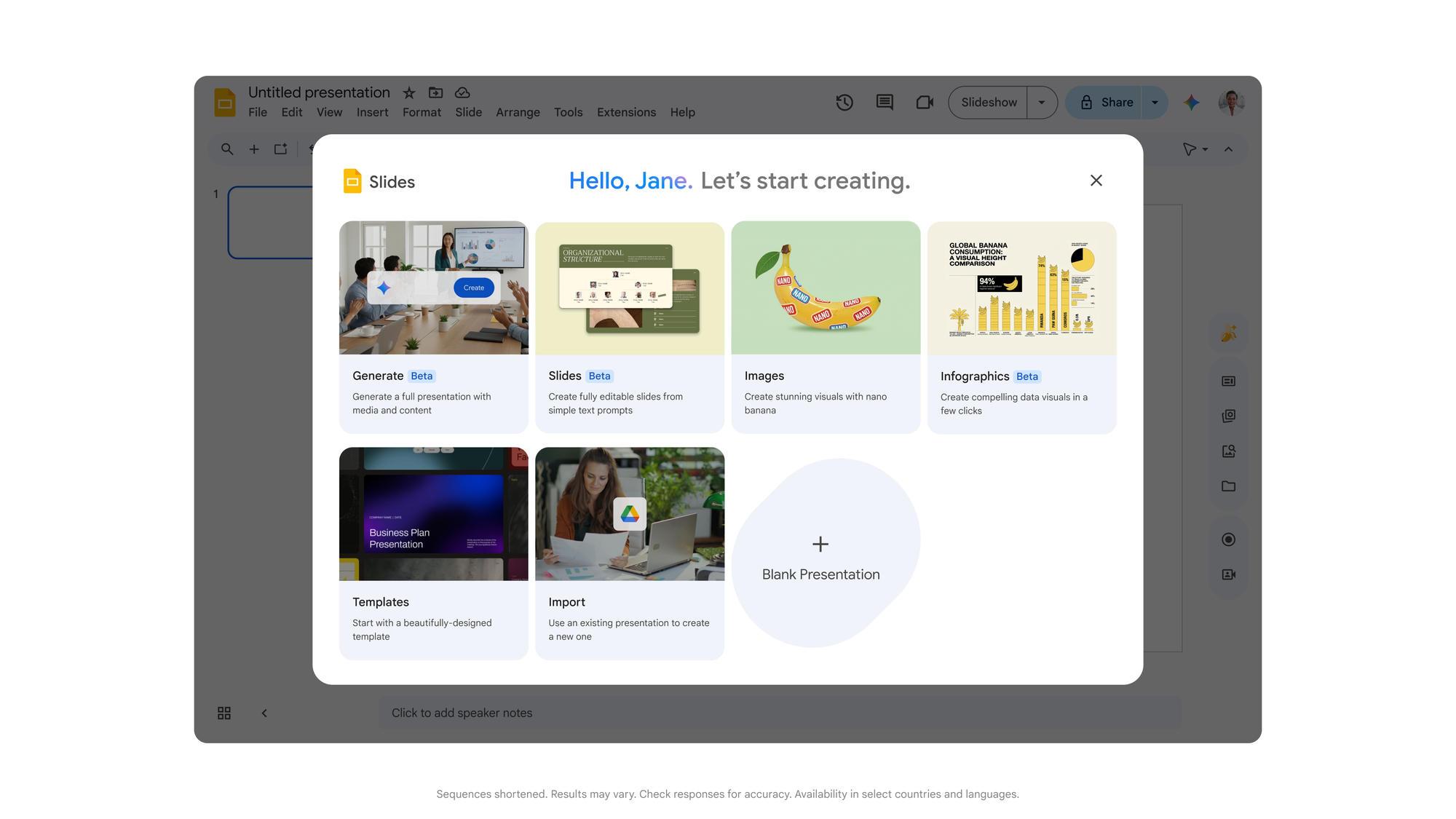
- Slides generates full editable decks in one pass using company templates and visual rules, moving beyond slide-by-slide creation
- Gmail receives AI Inbox and AI Overviews in search to surface relevant information automatically
- Drive Projects launches as a shared context hub that combines files and related emails in one workspace
- Security architecture runs on compliant infrastructure with customer data isolation, no use for ads or unauthorized model training, and admin governance tools
- Sovereign data controls available for US and EU, with Germany and India planned for future expansion
- Workspace MCP Server enables external AI apps and agents to connect to Workspace data and actions
- Builds on Workspace Studio (December 2025 GA) and Personal Intelligence in Gemini app (January 2026)
- Rollout is staged with some features available now, others in preview or private preview including Workspace actions in Gemini Enterprise and auto-browse in Chrome Enterprise
Decoder
- Semantic layer: A data abstraction layer that understands relationships and meaning between different data sources, not just raw data storage
- Workspace Intelligence: Google's system that maps and connects context across all Workspace applications for AI agent use
- MCP Server: Model Context Protocol server that allows external AI applications to access and interact with Workspace data
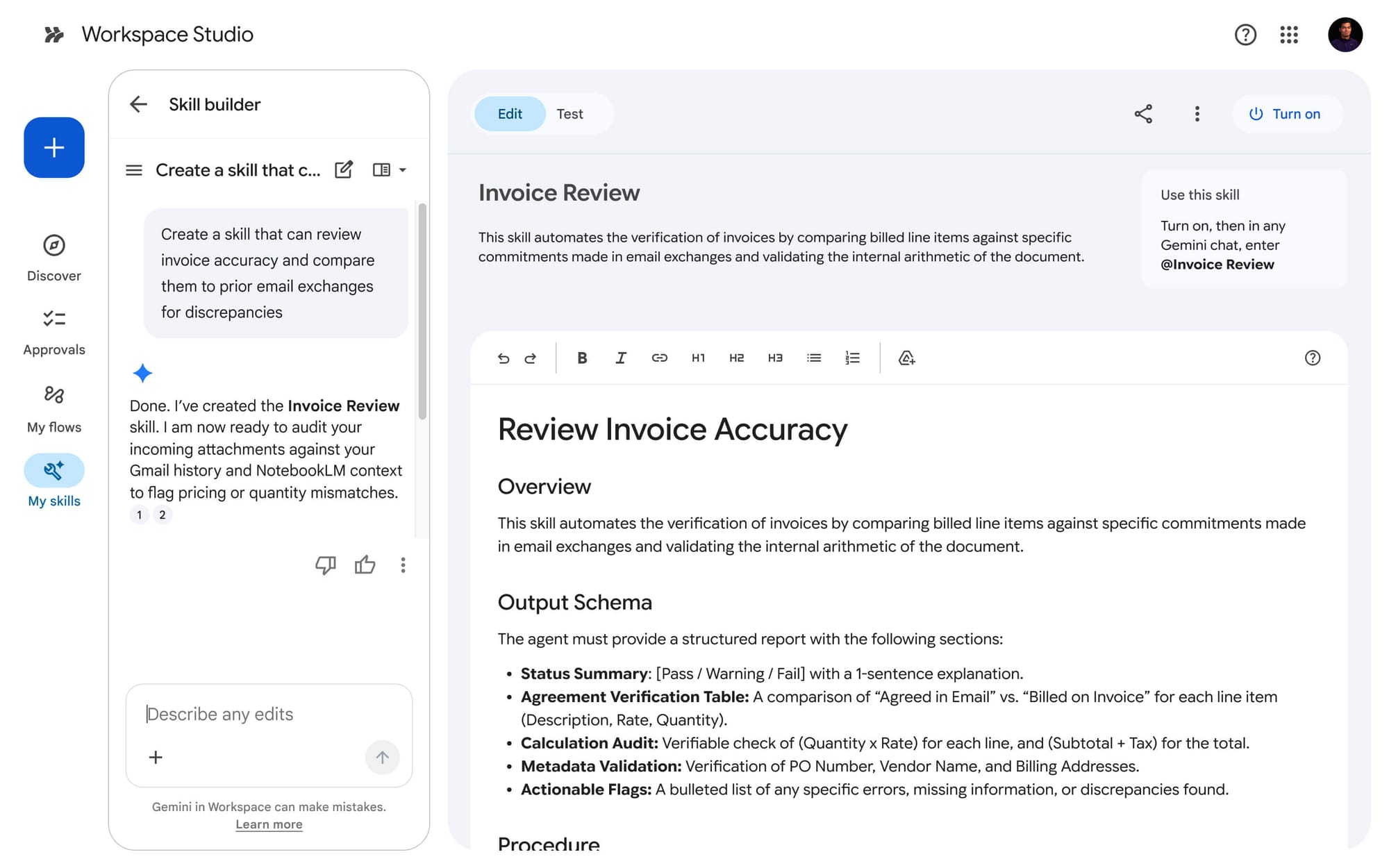
- Workspace Studio: No-code platform for building and sharing custom AI agents within Google Workspace
- Client-side encryption: Data encryption that happens on the user's device before transmission, keeping keys away from the service provider
- Sovereign data controls: Governance features that ensure data processing and storage comply with specific country regulations and remains within geographic boundaries
Original article
Google used Cloud Next on April 22, 2026, to introduce Workspace Intelligence, a new semantic layer for Google Workspace that maps emails, chats, files, collaborators, and active projects into shared context for Gemini-powered agents. The idea is to shift Workspace from a set of separate productivity apps into a system that can understand what a worker is trying to do, pull together the right context in real time, and act on it across the suite. Cloud Next '26 runs April 22 through April 24 in Las Vegas, and Google had already signaled before the event that connected enterprise workflows, agentic collaboration, and security would be central to its Workspace push.
Workspace Intelligence is aimed at organizations that want AI to do more than draft text. Google says the system can gather relevant material across Workspace, rank priorities, track key stakeholders, and adapt outputs to a user's writing, formatting, and communication patterns. In practice, that gives Google Chat a larger role. Ask Gemini in Chat is being positioned as a command line for work, with daily briefings, file retrieval by description, document and slide generation, and meeting scheduling tied to the rest of a company's Workspace footprint.
Google paired the launch with a wide product update across the suite. Sheets is getting natural-language spreadsheet building, third-party imports from apps such as HubSpot and Salesforce, and a new canvas layer for dashboards, heat maps, and kanban-style views. Docs can generate infographics grounded in business data, edit batches of images for visual consistency, and handle comment triage. Slides can now generate full editable decks in one pass using company templates and visual rules. Gmail is getting AI Inbox and AI Overviews in search, while Drive adds Drive Projects as a shared context hub for files and email.
The move also fits into a broader product arc Google has been building for months. Google Workspace Studio reached general availability in December 2025 as a no-code way to build and share AI agents inside Workspace, and Google introduced Personal Intelligence in the Gemini app in January 2026 to connect Gemini with user data from Google apps. Workspace Intelligence brings that context-first model deeper into the business stack, where Google is now tying it directly to Docs, Sheets, Slides, Drive, Gmail, and Chat.
Security is central to the pitch because Google is asking companies to let AI reason across mail, files, chat, and calendars. Google says Workspace Intelligence runs on the same compliant infrastructure as the rest of Workspace, with customer data not used for ads or for model training outside Workspace without permission. Admin controls, agent governance tools, client-side encryption, and sovereign data controls for the US and EU are part of the rollout, with Germany and India named as future countries for expanded data processing and storage controls. Some companion features are rolling out in the coming weeks, while others remain in preview or private preview, including Workspace actions inside the Gemini Enterprise app, Gemini auto browse in Chrome Enterprise for US customers, and a new Workspace MCP Server for outside AI apps and agents.
For Google, this is another step in turning Workspace into a control layer for everyday business operations rather than a place where documents and messages simply live. The company has spent the past year pushing Gemini deeper into Docs, Drive, Meet, Gmail, and Chat, while using Cloud Next to sell that stack to larger organizations that care about governance, cross-app context, and migration from Microsoft 365. Google Workspace has long ranked among the company's biggest business software products, and this launch shows Google now wants that installed base to serve as the context engine for enterprise agents as well.