Google prepares credits system for Gemini (2 minute read)
Google is introducing a credit-based usage system for Gemini that gives users monthly credit allowances and top-up options, aligning with billing models already used by OpenAI and Anthropic.
Deep dive
- Google is moving from fixed prompt quotas per subscription tier to a flexible credit system where users get monthly allowances and can buy top-ups
- Credits currently only work in experimental tools like Flow, Whisk, and Antigravity, but strings in the latest build suggest they're coming to the main Gemini app
- The change brings Google in line with OpenAI, Anthropic, and Notion who already use consumption-based models, with xAI expected to follow for Grok Build
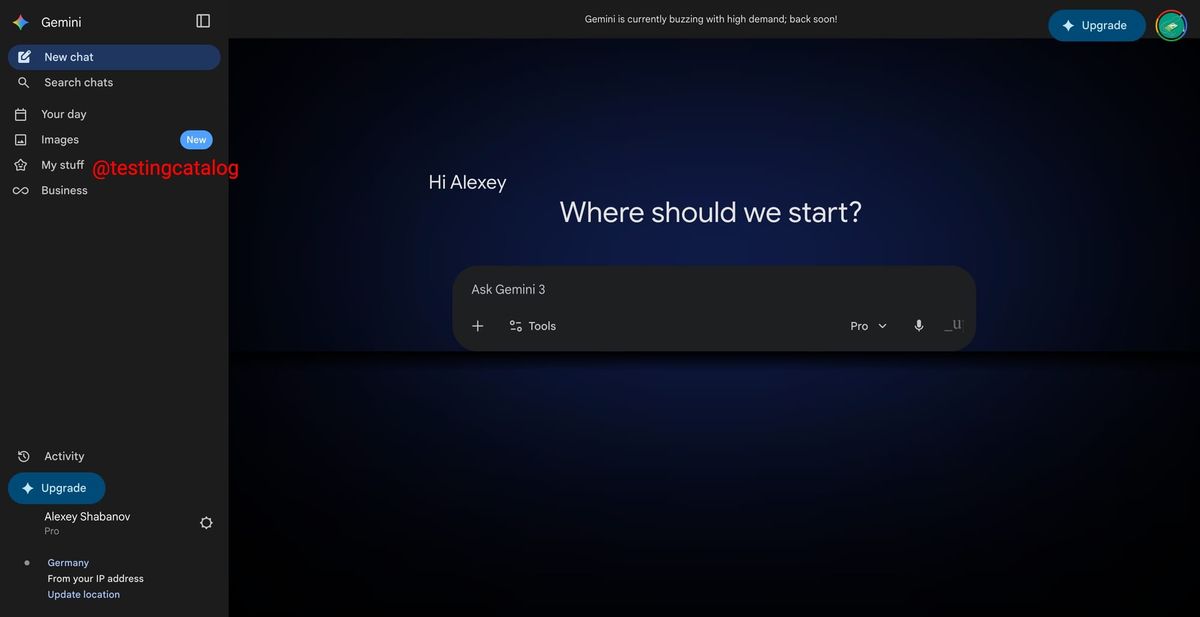
- A new dedicated images section has appeared in the Gemini web UI, which could be a home for image generation, an updated model, or a full in-app editor with canvas-style tools
- The images feature might revive Google's late 2024 work on Whisk and ImageFX that went quiet before being consolidated into Flow
- Google appears to be consolidating billing across products: developer perks folded into AI Pro/Ultra, consumer subscriptions linked to AI Studio credits
- A unified credit pool could eventually cover Gemini app, AI Studio, Antigravity, Flow, and image editing tools, particularly useful for coding-heavy workloads in Jules, Gemini CLI, and a rumored desktop app
- The Gemini API already launched prepaid billing for US customers as of April 15, 2026, with opt-in available for existing users
- Announcement likely coming at Google I/O on May 19-20, 2026 alongside Stitch redesign, Jitro, AI Studio Build expansion, and Skills rollout
Decoder
- AI Pro: Google's $19.99/month Gemini subscription tier with higher usage limits than the free tier
- AI Ultra: Google's $249.99/month premium Gemini subscription for enterprise and power users
- Flow: Google's experimental AI workspace tool that already uses credit-based billing
- Whisk: Google's image generation experiment from late 2024
- Antigravity: One of Google's experimental AI tools that currently uses credits
- Deep Research / Deep Think: Intensive Gemini features that perform extended analysis or reasoning tasks
- AI Studio: Google's developer platform for building with Gemini models, now linked to consumer subscriptions
Original article
Google appears to be preparing a major shift in how consumers interact with the Gemini app, with new strings referencing usage limits surfacing in the latest build. The signals point toward a credit-based system coming to the core chat surface, where users would receive a monthly allowance to spend across models and features, with the option to top up when they run out. Currently, Gemini relies on fixed prompt quotas and time-bound caps tied to each subscription tier, while Google's credit mechanics have been confined to Flow, Whisk, and Antigravity, plus top-ups available to AI Pro and AI Ultra members.
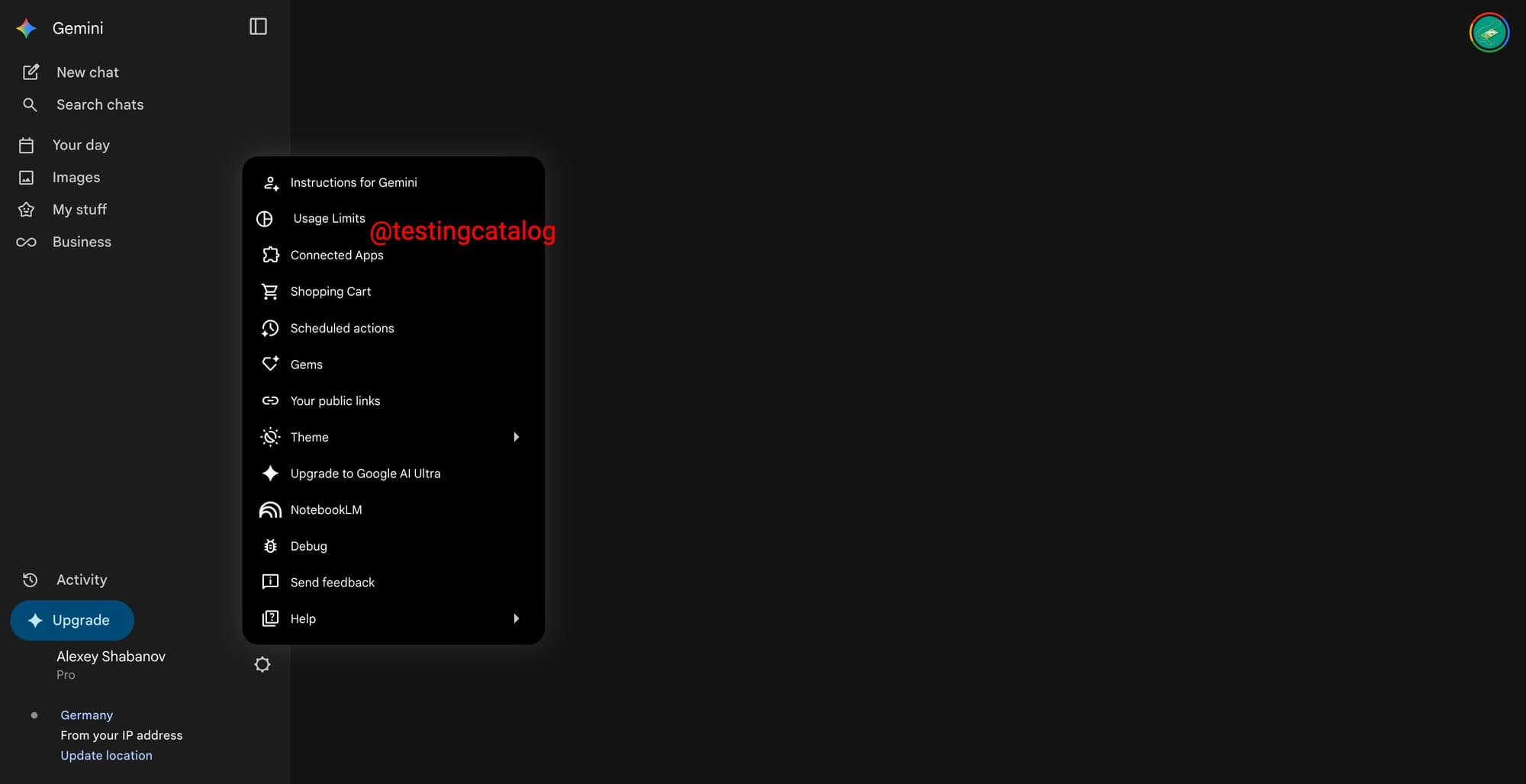
Extending credits into the main Gemini app would bring Google closer to the flexible consumption model already in place at OpenAI, Anthropic, and Notion, and xAI is expected to follow suit with the Grok Build rollout. For power users, the change would mean more predictable budgeting for heavy workloads, particularly those involving agentic tasks, Deep Research, Deep Think, or long multimodal sessions. It would also give Google a cleaner lever to introduce premium features without forcing users to make a steep jump from AI Pro at $19.99 to AI Ultra at $249.99.
Alongside the credits signal, a dedicated images section has appeared in the web UI, labeled NEW. At this stage, it is unclear whether it simply provides a distinct home for image generation, teases an updated model, or points to a more comprehensive image editor built directly into Gemini. Google had a burst of activity on this front in late 2024 with Whisk and ImageFX, but that track went quiet before the recent consolidation into Flow. A proper in-app editor within Gemini, pairing Nano Banana 2 and Nano Banana Pro with canvas-style tools, would mark the return of that project to the core product rather than a standalone Labs surface.
Excited to share that the Gemini API now has prepaid billing, rolled out to start for US customers!!
We have been working hard across Google to enable this. It's the default for new API users and existing users can opt in via a new billing account, all directly in AI Studio. https://t.co/9XACzAFbGO
— Logan Kilpatrick (@OfficialLoganK) April 15, 2026
Strategically, this fits a broader consolidation underway at Google. Developer program perks have already been folded into AI Pro and Ultra, consumer subscriptions are linked to AI Studio credits, and the company is unifying its billing spine. A shared credit pool covering the Gemini app, AI Studio, Antigravity, Flow, and a revived image editor would be the logical next step, especially with Jules, Gemini CLI, and the rumoured Gemini desktop app moving toward coding-heavy workloads that demand heavier compute budgets. Timing favours Google I/O on May 19 and 20 as the likely unveil moment, alongside the Stitch redesign, Jitro, AI Studio Build expansion, and the broader Skills rollout.