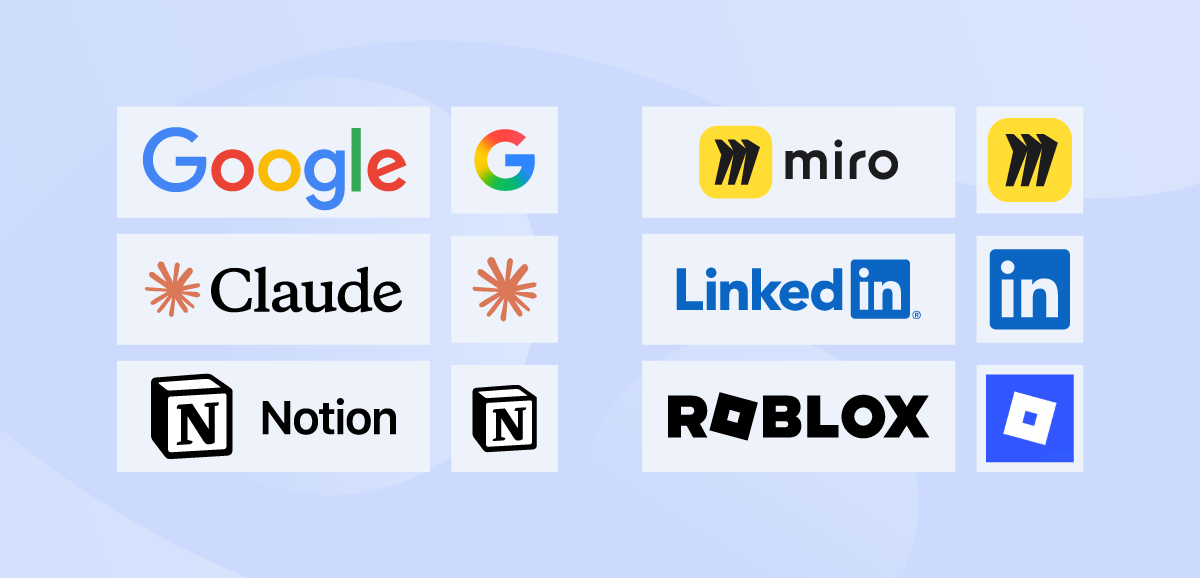
How to Make a Custom Favicon for Your Brand Website (14 minute read)
This comprehensive guide explains how to design effective favicons for websites, covering technical requirements, design principles, and cross-platform compatibility.
What: A detailed tutorial on favicon design that covers what favicons are, where they appear across digital platforms (browser tabs, bookmarks, mobile home screens, PWAs), core design principles (simplicity, scalability, contrast, brand consistency), technical specifications (sizes from 16×16 to 512×512 pixels in ICO, PNG, or SVG formats), and a step-by-step creation process with case studies.
Why it matters: Favicons are often overlooked but serve as critical micro-touchpoints for brand recognition, appearing whenever users have multiple tabs open or need to quickly identify a site among bookmarks, and they require different design approaches than full logos to remain clear at tiny sizes.
Takeaway: When creating a favicon, design for 16×16 pixels first to ensure clarity at the smallest size, export in multiple formats (ICO for legacy browser support, PNG for quality, SVG for scalability), and simplify your logo to its most essential element—whether a symbol, icon, or initial—rather than trying to fit the full design.
Decoder
- Favicon: A small square icon (16×16 to 512×512 pixels) representing a website in browser tabs, bookmarks, and mobile interfaces
- PWA (Progressive Web App): Web applications that can be installed on devices like native apps, where favicons serve as the app icon
- ICO format: Traditional favicon format supporting multiple sizes in one file with broad browser compatibility
- SVG (Scalable Vector Graphics): Vector-based image format that scales without quality loss, ideal for high-resolution displays
- Apple Touch Icon: Larger favicon variant (180×180 pixels) used when websites are added to iOS home screens
Original article
A well-designed favicon increases credibility, improves user experience by helping visitors navigate multiple tabs, and maintains brand consistency across digital platforms.