The Future of UI Design is Agentic Design (7 minute read)
AI agents are now generating complete UI designs directly inside Figma, moving beyond simple assistance to core integration in the design workflow.
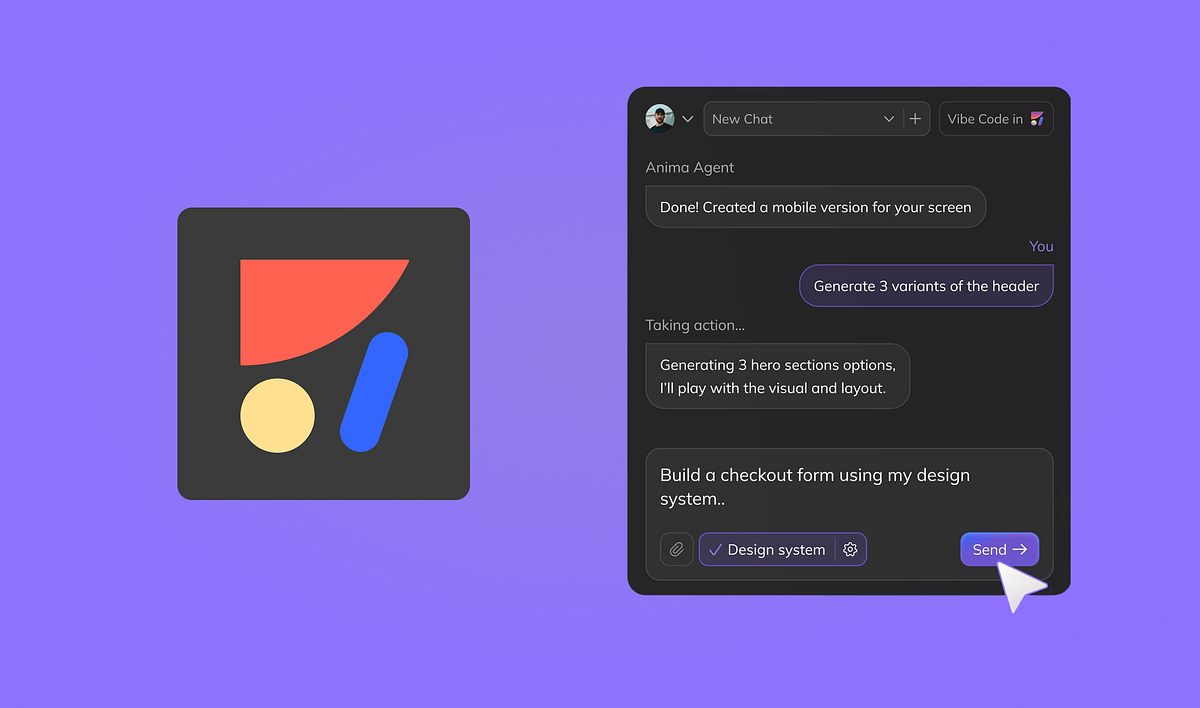
What: Anima Agent is a Figma plugin that uses AI models (defaulting to Claude Sonnet 4.6) to generate elaborate user interfaces from text prompts, supporting three scenarios: building new designs from scratch, creating variants of existing designs, and assembling screens from pre-existing design system components.
Why it matters: This represents a fundamental shift in design workflows where AI creates actual deliverables rather than just offering suggestions, though the generated designs come with caveats like visual defects requiring manual cleanup and detached component instances that aren't linked to the original design system.
Takeaway: Designers can install the Anima Agent plugin in Figma to experiment with AI-generated UI designs in their workflow.
Deep dive
- The plugin uses Claude Sonnet 4.6 as the default model with options to switch to OpenAI GPT 5.3 Codex, while Claude 4.6 Opus is available but consumes more tokens for similar output quality
- All generated designs include auto-layout configurations built in, making them immediately adjustable and responsive without manual setup
- When building from scratch, the tool can generate 5-7 complete app screens with consistent visual language from a single detailed prompt describing user needs, UX requirements, visual design specs, and components
- Generated designs may contain visual defects like misplaced navigation bars that require manual correction before handoff to development teams
- Creating variants allows designers to select existing frames and request alternative versions focused on specific aspects like data visualization approaches
- When working with design systems, the plugin can use selected components to assemble new screens, but generates detached visual copies rather than true component instances linked to the master design system
- This disconnect from the source design system means future updates to components won't propagate to AI-generated screens, creating potential maintenance challenges
- The approach differs from autonomous AI design tools that generate and ship coded prototypes directly, instead keeping designers in control with Figma-based refinement
- The workflow represents a middle ground between traditional manual design and fully autonomous AI generation, maintaining designer agency while accelerating production
Decoder
- Agentic design: An approach where AI tools are integrated at the core of the design process to actively create UI designs, rather than just providing suggestions or answering questions
- Auto-layout: A Figma feature that makes design elements automatically adjust and reflow when content or container sizes change, similar to CSS flexbox
- Design system: A collection of reusable components, patterns, and guidelines that ensure visual and functional consistency across a product
- Detached instances: Visual copies of components that look identical but aren't linked to the original master component, so they don't update when the master changes
- Claude Sonnet 4.6: An AI language model from Anthropic used to interpret design prompts and generate UI specifications
- Autonomous AI design: A fully automated approach where AI tools create complete designs and ship coded prototypes without designer intervention in the process
Original article
Agentic design is reshaping UI workflows. Tools like Anima Agent are enabling designers to generate elaborate interfaces directly inside Figma using AI. The plugin defaults to Claude Sonnet 4.6 and supports three core scenarios: building new designs from scratch, creating variants of existing ones, and assembling screens from a pre-existing design system. Generated designs come with auto-layout built in, though they may require manual cleanup for visual defects and produce detached — rather than true — Figma component instances.