DEVOURED
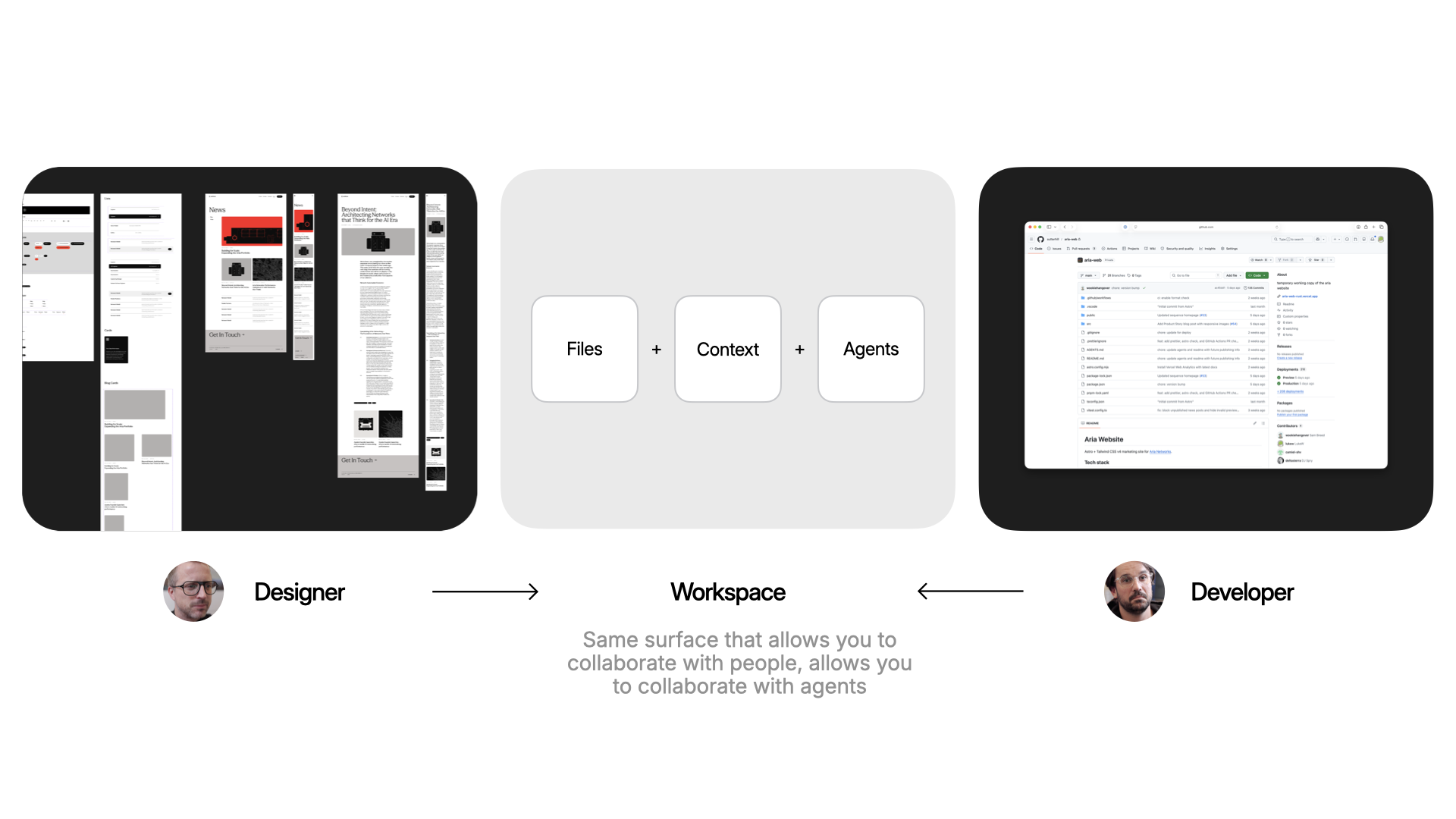
The designer/developer handoff is dead: Amelia Wattenberger's Intent encodes design systems and dev preferences into shared workspaces, making 'throwing work over the wall' obsolete.
What: Amelia Wattenberger and a co-author demoed Intent at Design Futures Assembly, an app that bundles isolated codebase copies, context (specs, MCP data), and agents into shared workspaces. Designers encode grids, typography, and animations from Figma; developers encode Tailwind configs, testing setups, and deployment rules. A demo showed handling 10 last-minute requests in minutes using parallel workspaces while maintaining design and code cohesion.
Why it matters: AI tools amplify individual speed but haven't fixed cross-discipline collaboration, so teams now throw more work over the wall faster. Intent's approach of encoding organizational taste into workspace infrastructure signals that the next productivity leap requires tooling that embeds standards and alignment, not just acceleration.
Deep dive
- Traditional designer/developer handoff creates discipline barriers that persist even as AI tools increase individual output, resulting in teams throwing more work over the wall faster
- Intent creates shared workspaces bundling files (isolated codebase copy), context (specs, scratchpad, MCP data from external systems), and AI agents
- Designers encode preferences (grid, typography, animation timing) from Figma into the workspace; developers encode preferences (CSS frameworks like Tailwind, testing setups, deployment rules) in code
- All outputs from a workspace automatically inherit the encoded design system and development standards, ensuring alignment without manual handoffs
- Multiple workspaces run in parallel for simultaneous feature work while maintaining cohesion through shared encoded preferences
- Example workflow: content writer drafts in Word, illustrator creates assets, any team member spins up workspace to assemble blog post that matches site design and code standards
- Built on version control so encoded preferences automatically propagate to every new workspace spawned from the repo
- Demo showed processing 10 last-minute 8pm requests in minutes without breaking design or code integrity
- Core argument: AI solves individual speed but cohesion is the bottleneck; encoding taste into workspace infrastructure solves collaboration at scale
Original article
The traditional designer/developer handoff process creates barriers between disciplines, and while AI tools increase individual productivity, they often lead to throwing more work "over the wall" faster without better collaboration. A new app called Intent aims to solve this by creating shared workspaces where designers and developers can collaborate using the same surface while maintaining their preferred tools and expertise. This approach encodes design systems and development preferences into the workspace, ensuring alignment and smooth handoffs between team members and AI agents.
Explore all 66 articles in today's digest
Fresh dev news, AI-digested daily. Never miss a trend at devoured.fyi