DEVOURED
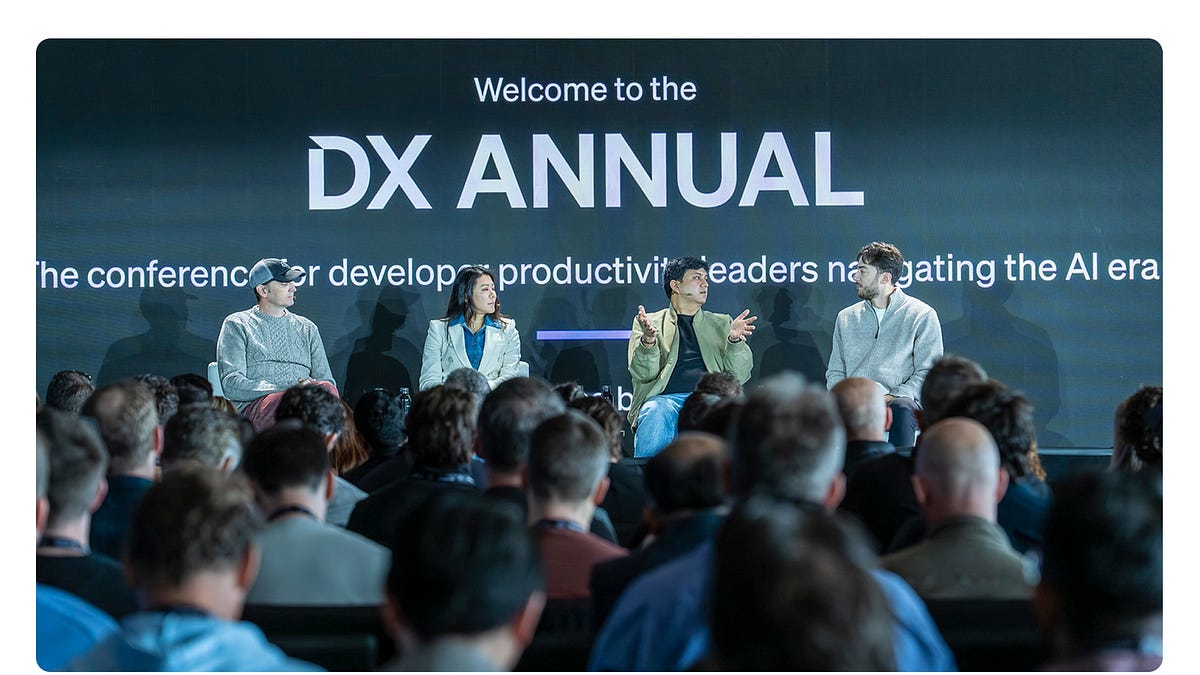
Microsoft CVP Tim Bozarth, 1Password CTO Nancy Wang, and Atlassian CTO Taroon Mandhana report AI is inverting the SDLC from 80% operate to majority plan/validate, shrinking new product teams from 8 to 3-4 people.
What: Panel discussion at DX Annual with Tim Bozarth (Microsoft CVP CoreAI), Nancy Wang (1Password CTO), and Taroon Mandhana (Atlassian CTO AI & Teamwork) on AI's impact on software development. Microsoft reports the SDLC traditionally split 80% operate/10-15% create is inverting to majority plan/validate time. 1Password eliminated full-length PRDs in favor of customer-facing prototypes and compressed planning horizons from 12-18 months to 90 days. Atlassian reduced zero-to-one project teams from 8 to 3-4 engineers and automated 50% of simple vulnerability fixes. All three companies report non-engineers (designers, CX associates) now submit production PRs, and all are on their third AI budget forecast since January.
Why it matters: This signals that AI's primary bottleneck shift is from building (now compressed) to deciding what to build, forcing organizations to optimize for decision velocity through smaller teams, shorter cycles, and generalist engineers with product instincts over specialized implementers.
Takeaway: If you're early-to-mid career, prioritize spanning the full product development lifecycle over specializing deeply, as AI makes generalists who understand the full picture more valuable than specialized implementers (1Password CTO Nancy Wang's explicit advice to new grads).
Deep dive
- Microsoft's SDLC traditionally split 80% operate, 10-15% create, remainder across plan/validate/deploy — now inverting to majority plan/validate as create and operate compress via AI
- Microsoft emphasizes humans must stay in the loop for validate phase and security — use AI for pen testing and red teams but don't delegate security delivery to AI
- 1Password stopped writing full-length PRDs, teams build prototypes and put them in front of customers instead, eliminating nearly half the back-and-forth on edge cases
- 1Password running reinforcement learning lab to build DevOps agent customized to their environment, trained on real incident data and engineer responses to automate operate phase
- Atlassian seeing most untapped potential in operate — engineers spend significant time responding to alerts, customer issues, incidents; agents now respond to alerts and only escalate humans for real issues
- Atlassian automated 50% of simple vulnerabilities (library version bumps) using AI and accelerated accessibility bug fixes that were taking a backseat
- Zero-to-one project teams shrinking to 3-4 people (previously 8) because AI compressed building enough that alignment and decision-making became the bottleneck
- Microsoft shifted to 8-week cycles with small mission-specific v-teams focused on speed of learning rather than sustained delivery
- 1Password compressed planning horizons from 12-18 months to single quarter because tools and capabilities are changing too fast for longer-term planning
- None of the three companies mandate AI usage — all track daily active usage as diagnostic signal and rely on organic champions in groups of 100-200 engineers to drive adoption
- Token costs highly volatile — Atlassian CTO on third budget forecast since January, comparing difficulty to managing AWS COGS, now treating it with same rigor as cloud cost management
- 1Password built internal SaaS cost management tool mapping token spend by repo and project, recommends negotiating forward-projected volume commitments with providers to reduce per-token cost
- Microsoft emphasizes not every token needs to produce direct value — some spend is for learning and experimentation, and fastest learners will win
- Future engineer skills profile: generalists with strong product instincts who span entire product development lifecycle, not early specialists — agency and decision-making becoming as important as technical depth
- Designers at Atlassian submitting PRs for interactive prototypes (useful for early fidelity conversations, but engineers escalate quality issues daily)
- 1Password CX associates generating PRs for front-end test coverage across browsers and mobile clients — engineers shifted to building testing harnesses and review processes rather than writing tests themselves
- Teams seeing patterns of code duplication and tech debt increasing as people rapidly produce features, prompting return to standardized approaches and more right-of-code quality checks
- Microsoft notes non-engineers getting most value from AI aren't necessarily contributing product code, but using it to optimize their own workflows — gathering information, communicating, running processes
Original article
This post contains a lightly edited excerpt from a panel discussion on how companies like Microsoft, 1Password, and Atlassian are adapting to the impact AI is having now and in the future.
Explore all 66 articles in today's digest
Fresh dev news, AI-digested daily. Never miss a trend at devoured.fyi