DEVOURED
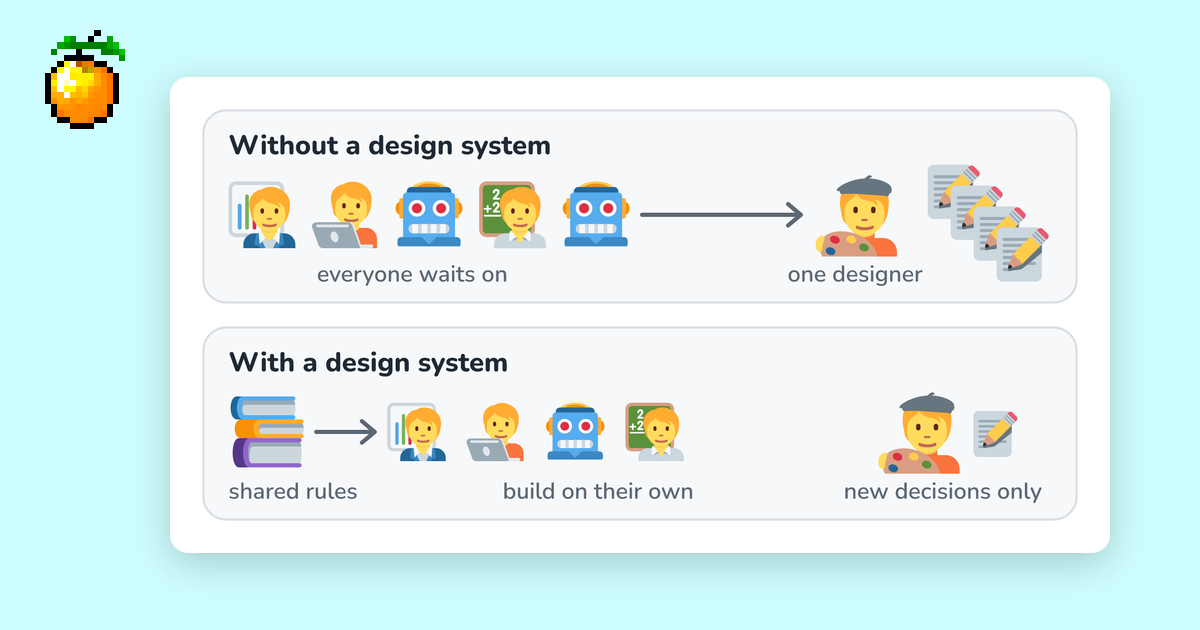
Why AI Factories Need a Design System
AI 'factories' require rigid, machine-readable design systems to prevent generated content from drifting into visual inconsistency and accessibility non-compliance.
What: Kirupa Chinnathambi’s 'ROFL' design system provides agents with specific Markdown, JSON catalogs, and task-scoped prompts, reducing review cycles for new content by up to 5x.
Why it matters: Without a design system, AI agents lack the 'contextual intuition' of a human designer, leading to repeated, predictable errors that drain human review time.
Takeaway: Start building your design system by creating an 'interface inventory' of your current components and extracting them into named, role-based tokens (e.g., `--bodyText` instead of a hex code).
Deep dive
- Standardize tokens (colors, spacing, type) as role-based variables to ensure theme compatibility (dark/light mode).
- Index the system so agents can retrieve only the specific section needed, minimizing token usage.
- Automate accessibility checks (e.g., contrast, alt text) as guardrails for every generation.
- Use 'LLM-as-judge' patterns to verify outputs against the design system rules before human review.
- Generate documentation (Markdown, JSON) from a single source of truth to avoid stale rules.
Decoder
- Design Tokens: Named, platform-agnostic values (like colors or font sizes) used to replace hard-coded values in design systems.
- Interface Inventory: A method of capturing every unique instance of UI elements (buttons, tables, etc.) in a product to identify inconsistencies and define standard versions.
- LLM-as-judge: A technique where one AI model is tasked with evaluating the quality or compliance of content generated by another model.
Original article
Full article content is not available for inline reading.
Explore all 40 articles in today's digest
Fresh dev news, AI-digested daily. Never miss a trend at devoured.fyi